7 Ways Of Managing Vendor Risk in Consumer Electronics Supply Chains
Procurement teams manage vendor risk in consumer electronics supply chains—particularly within New Product Introduction (NPI) and Design for Manufacturability (DFM) workflows— through structured supplier risk management frameworks, rigorous vendor vetting, continuous compliance monitoring, diversified global sourcing strategies, and data-driven supplier performance tracking. These approaches reduce disruptions, improve visibility, and ensure reliable product delivery in complex and fast-moving manufacturing environments.
Introduction
Managing vendor risk in consumer electronics supply chains, where Design for Manufacturability (DFM) and Engineering Validation Test (EVT) stages define production readiness, has become a strategic priority for procurement leaders operating in fast-moving and highly competitive markets. From smartphones and wearables to smart home devices and connected systems, product success depends on a complex network of suppliers delivering consistent quality at scale.
However, increasing reliance on global suppliers introduces challenges such as supplier instability, regulatory risks, and unpredictable lead times. Even a single disruption can delay product launches, increase costs, and impact brand reputation—especially during critical phases like Design Validation Testing (DVT) and pilot production runs.
Procurement teams manage vendor risk in consumer electronics supply chains by aligning sourcing decisions with DFM principles and NPI timelines, through structured frameworks, vendor vetting, compliance monitoring, diversified sourcing, and continuous performance tracking—ensuring resilience and reliable product delivery. Please read on to explore how these strategies work in practice.
Why Vendor Risk Management Is Increasingly Critical
As supply chains grow more interconnected and complex, the impact of supplier-related disruptions continues to rise. Procurement teams must proactively identify and mitigate risks to ensure continuity and performance.
- Common Challenges in Vendor Risk Management
Overdependence on single-source suppliers increases vulnerability to disruptions. Limited visibility across multi-tier supplier networks makes it difficult to detect risks early. Regulatory compliance requirements vary across regions, adding complexity to supplier management.
Additionally, volatility in component availability especially semiconductors and inconsistent supplier performance during production ramp-ups create further risks. Addressing these challenges requires structured and proactive strategies.
The Growing Complexity of Consumer Electronics Supply Chains
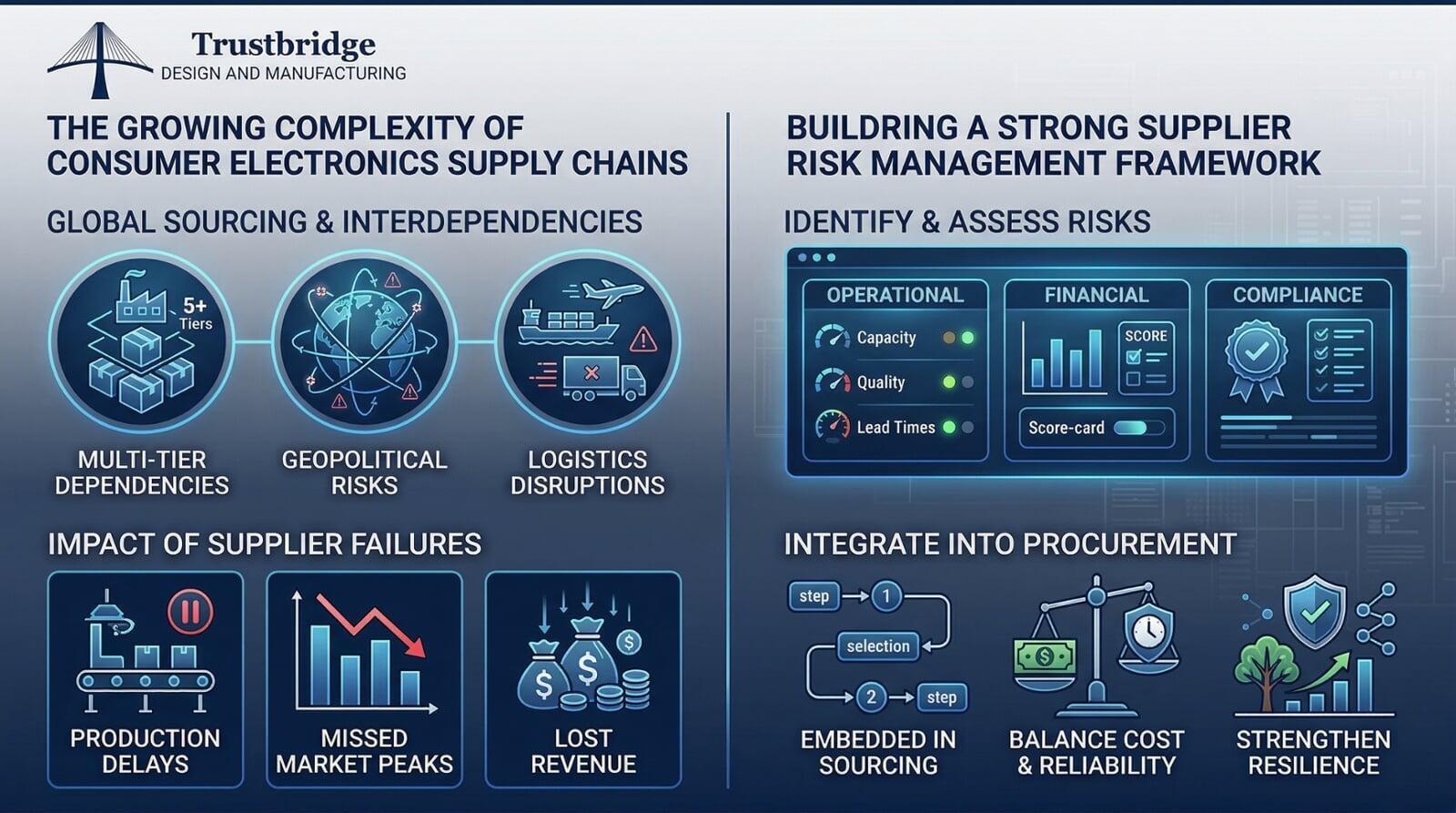
Consumer electronics supply chains involve multiple tiers of suppliers delivering specialized components such as semiconductors, sensors, PCBs, enclosures, and connectors. A disruption at any level can cascade across the entire production process.
- Global Sourcing and Interdependencies
Global sourcing enables access to cost advantages and advanced manufacturing capabilities, but it also introduces dependencies across regions. Geopolitical risks, trade restrictions, and logistics disruptions can significantly impact supply continuity.
Procurement teams must evaluate not just cost, but also geographic exposure and supplier concentration. Diversifying suppliers across regions helps reduce dependency and improves resilience.
- The Impact of Supplier Failures
Supplier failures often occur during critical stages such as product launches or production ramp-ups. Delays, quality issues, or capacity limitations can disrupt timelines and increase operational costs.
These disruptions can result in missed market opportunities and lost revenue, particularly in highly competitive markets where timing is critical.
Building a Strong Supplier Risk Management Framework
A structured supplier risk management framework enables procurement teams to consistently identify, assess, and mitigate risks across the supply chain - while aligning supplier capabilities with DFM and scalable manufacturing requirements.
- Identifying and Assessing Supplier Risks
Supplier risk assessment includes evaluating operational, financial, and compliance-related factors. Operational risks involve production delays and capacity limitations, while financial risks relate to supplier instability. Compliance risks include failure to meet regulatory or quality standards.
In DFM-driven environments, this also includes assessing a supplier’s ability to provide manufacturability feedback and support design iterations efficiently.
Identifying these risks early allows procurement teams to make informed decisions and prevent disruptions before they impact production.
- Integrating Risk Management into Procurement Strategy
Risk management should be embedded into procurement processes rather than treated as a separate activity. This includes integrating risk evaluation into supplier selection, contract negotiation, and performance tracking.
This ensures sourcing decisions align with DFM principles, tooling readiness, and NPI timelines, reducing late-stage redesign risks.
The Importance of Vendor Vetting in Risk Prevention
Vendor vetting is one of the most effective ways to prevent supplier-related risks before they impact production. Strong vetting processes ensure suppliers are capable of meeting technical, operational, and quality expectations.
- Evaluating Technical and Operational Capabilities
Procurement teams assess suppliers through factory audits, technical reviews, and sample evaluations. These steps ensure suppliers can consistently meet quality standards and support required production volumes.
In precision-driven consumer electronics environments, thorough evaluation is critical to avoiding defects and delays.
- Ensuring Long-Term Supplier Reliability
Long-term supplier reliability depends on financial stability, operational efficiency, and scalability. Suppliers must be capable of supporting production ramp-ups and adapting to fluctuations in demand.
Selecting reliable partners reduces risk and enables sustainable growth.
Ensuring Supplier Compliance Across the Supply Chain
Supplier compliance ensures that products meet regulatory, safety, and quality requirements across global markets, reducing the risk of penalties, recalls, or delays.
- Regulatory and Quality Standards
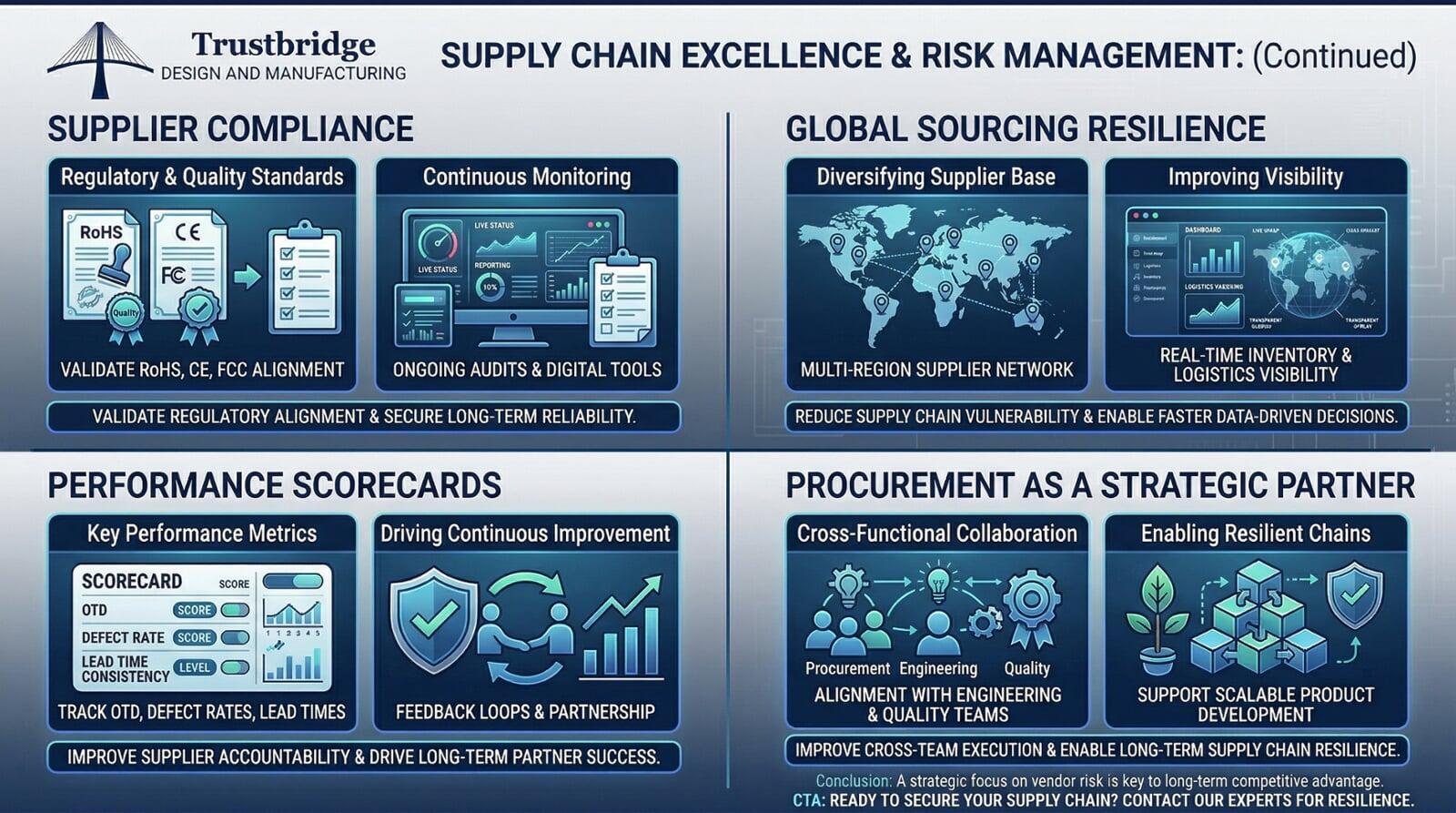
Suppliers must comply with standards such as RoHS, CE, and FCC, along with relevant quality certifications. These standards ensure product safety and regulatory alignment across different markets.
Procurement teams must validate compliance during onboarding and ensure adherence throughout the supplier lifecycle.
- Continuous Compliance Monitoring
Ongoing monitoring ensures suppliers maintain compliance over time. Organizations use audits, reporting systems, and digital tools to track supplier performance and identify issues early.
This proactive approach reduces the likelihood of non-compliance and operational disruptions.
Managing Global Sourcing Risks Effectively
Global sourcing strategies must strike a balance between cost advantages and risk mitigation to ensure long-term supply chain stability.
- Diversifying Supplier Base
Supplier diversification reduces dependence on single sources and minimizes disruption risks. Multi-region sourcing ensures that production can continue even if one region faces challenges.
- Improving Visibility Across the Supply Chain
Supply chain visibility enables procurement teams to monitor supplier performance, inventory levels, and logistics in real time. Digital tools such as ERP systems and dashboards provide actionable insights.
Improved visibility supports faster decision-making and better control over potential risks.
Leveraging Supplier Scorecards for Performance Management
Supplier scorecards provide a structured approach to evaluating performance and identifying potential risks before they escalate.
- Tracking Key Performance Metrics
Metrics such as on-time delivery, defect rates, and lead time consistency help procurement teams evaluate supplier performance and detect patterns that may indicate risks.
Data-driven insights improve supplier accountability and support better decision-making.
- Driving Continuous Improvement
Regular performance reviews encourage suppliers to improve processes and maintain quality standards. This strengthens supplier relationships and enhances overall supply chain efficiency.
Procurement as a Strategic Driver of Risk Management
Procurement plays a central role in managing vendor risk and ensuring supply chain stability, making it a key driver of operational success.
- Cross-Functional Collaboration
Collaboration between procurement, engineering, and quality teams ensures alignment across sourcing and product development. This reduces risks and improves execution across the product lifecycle.
- Enabling Scalable and Resilient Supply Chains
By focusing on supplier reliability and proactive risk mitigation, procurement teams enable scalable and resilient supply chains that support rapid product development and consistent performance.
Conclusion
Managing vendor risk in consumer electronics supply chains requires a proactive and structured approach. As supply chains become more complex, procurement teams must prioritize supplier risk management, vendor vetting, compliance, and performance tracking.
Organizations that invest in these capabilities are better positioned to prevent disruptions, accelerate product development, and build stronger supplier relationships. In a fast-moving industry, effective vendor risk management is a key driver of competitive advantage.
If your organization is looking to strengthen vendor risk management in consumer electronics supply chains, now is the time to evaluate your procurement strategy.
By improving supplier vetting, enhancing compliance monitoring, and increasing visibility across your supplier network, you can reduce disruptions and improve overall performance. Partnering with experienced sourcing and procurement experts like Vulcury can help you build a more resilient, scalable, and future-ready supply chain.
Frequently Asked Questions (FAQs)
1. What are the key steps in the procurement process for consumer electronics?
Procurement follows a structured flow that includes supplier discovery, evaluation, RFP management, contract negotiation, onboarding, and ongoing performance monitoring. This end-to-end process ensures sourcing decisions align with product requirements, timelines, and cost targets.
2. Why is early collaboration between procurement and engineering important?
Early collaboration ensures sourcing decisions align with design requirements and Design for Manufacturability (DFM) principles. This reduces redesign cycles, improves feasibility, and helps select suppliers that can support both prototyping and mass production.
3. How do procurement teams evaluate and select the right suppliers?
Procurement teams assess suppliers based on technical capabilities, quality systems, scalability, cost, and reliability. Experience in processes like PCB assembly, injection molding, and precision machining is also critical to ensure consistent production outcomes.
4. How does procurement impact product quality and time-to-market?
Procurement directly affects product quality through supplier selection and quality control standards. It also influences time-to-market by ensuring timely sourcing, minimizing delays, and enabling smooth production ramp-ups.