
How the Best Manufacturers Win Consumer Electronics Manufacturing Contracts
Introduction
Consumer electronics manufacturing is one of the most competitive sectors in modern manufacturing. OEMs operate in markets defined by rapid product refresh cycles, compact device designs, and complex electronic assemblies that must be produced with high precision. Products such as smart devices, connected home equipment, and wearable electronics often move from prototype to market in less than 12–18 months, creating intense pressure on both engineering teams and manufacturing partners. For suppliers and manufacturers, winning these manufacturing contracts requires more than simply offering production capacity. It requires demonstrating technical capability, operational reliability, and the ability to collaborate closely with engineering and product development teams.
Many manufacturers can produce components or assemblies, but OEMs increasingly prefer partners who contribute to the broader product development process. The manufacturers who consistently win consumer electronics manufacturing contracts position themselves as strategic partners rather than transactional vendors. They bring engineering insight, manufacturing expertise, and supply chain coordination to help OEMs successfully bring products to market.
Manufacturers that succeed in this environment typically excel in several key areas, including design for manufacturability support, quality management systems, supply chain reliability, and scalable production capabilities. Together, these capabilities allow manufacturers to meet the expectations of OEM teams and secure long-term manufacturing partnerships.
Understanding What Consumer Electronics OEMs Prioritize
Consumer electronics OEMs operate in highly competitive markets where speed to market and product reliability are critical. Decisions about manufacturing partners are often made collaboratively between product engineers, sourcing managers, and operations leaders. These teams evaluate manufacturers not only on price but also on their ability to support engineering collaboration, maintain production quality, and manage supply chain complexity.
When evaluating potential manufacturing partners, OEMs frequently look for companies that have experience producing similar product categories. This may include electronic assemblies, mechanical housings, PCB integration, or complete device assembly. Manufacturers that demonstrate familiarity with these processes and can show proven production results are more likely to gain the confidence of OEM decision-makers.
Manufacturers who understand these priorities can position themselves more effectively during contract discussions. By demonstrating technical credibility and the ability to collaborate with engineering teams early in product development, they build the foundation for long-term partnerships. This early collaboration is particularly important when it comes to design for manufacturability.
Strong Design for Manufacturability Support
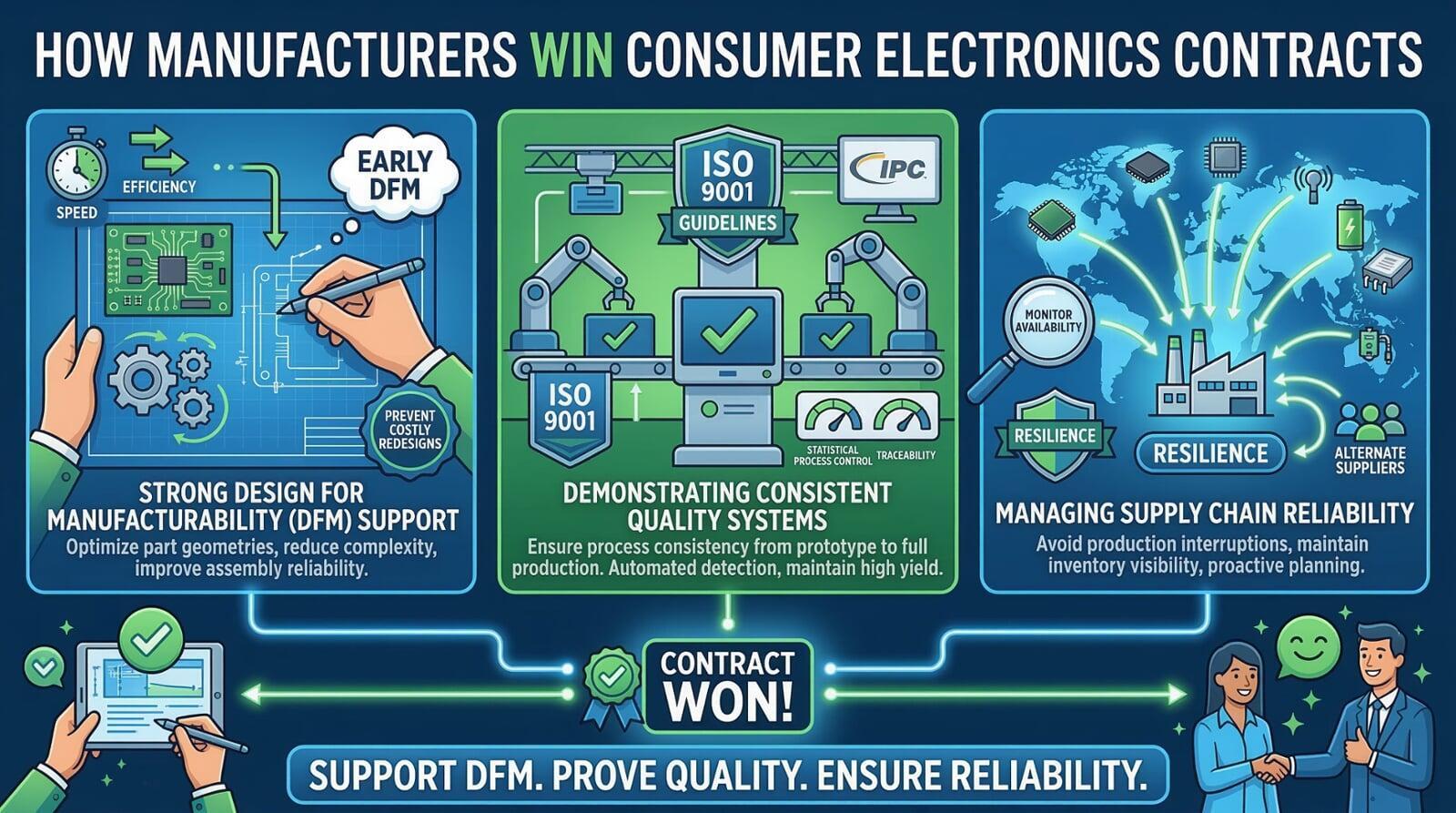
One of the most important ways manufacturers win consumer electronics manufacturing contracts is by supporting design for manufacturability (DFM). Many OEM engineering teams depend on manufacturing partners to provide practical feedback on how product designs can be optimized for efficient production.
Early DFM collaboration can prevent costly redesigns later in the development process. For example, manufacturers may recommend simplifying part geometries, reducing the number of fasteners, or selecting materials that improve molding or machining efficiency. In electronics manufacturing, DFM feedback may also include adjustments to PCB layouts, connector accessibility, or thermal management considerations that improve assembly reliability.
When manufacturers actively contribute to the design process, they help reduce production complexity while improving product reliability and manufacturing yield. This collaborative approach demonstrates engineering value and significantly increases the likelihood of securing long-term manufacturing contracts with OEM partners.
Demonstrating Consistent Quality Systems
Quality assurance is another critical factor when OEMs select manufacturing partners. Consumer electronics products are often produced in high volumes, and even small defects can create significant warranty or reliability issues once devices reach the market.
Manufacturers that win contracts typically operate with structured quality management systems such as ISO 9001 and follow industry standards relevant to electronics production, including IPC guidelines. These systems ensure that manufacturing processes remain consistent as production scales from prototype batches to full production runs.
Effective quality programs also include traceability systems, statistical process control, and automated inspection methods. These tools allow manufacturers to detect variations early, maintain consistent production quality, and give OEMs confidence that every unit will meet design specifications. Manufacturers who can demonstrate these capabilities significantly improve their chances of securing consumer electronics manufacturing contracts.
Managing Supply Chain Reliability
Consumer electronics products depend on globally sourced components such as semiconductors, sensors, microcontrollers, connectors, and batteries. Because these components often come from multiple international suppliers, managing supply chain reliability is a major responsibility for manufacturing partners.
Recent global semiconductor shortages have demonstrated how quickly supply disruptions can impact electronics production schedules. Manufacturers who maintain strong supplier relationships and monitor component availability closely can help OEMs avoid unexpected delays and production interruptions.
Proactive supply chain planning also involves identifying alternate suppliers, maintaining inventory visibility, and coordinating closely with OEM procurement teams. Manufacturers who demonstrate supply chain transparency and resilience become highly valuable partners for consumer electronics brands launching new products.
Supporting Rapid Production Scaling
Consumer electronics markets move quickly, especially during product launches. A device that begins with small pilot production runs may need to scale rapidly if market demand increases after release.
Manufacturers who consistently win manufacturing contracts are typically those that can support this transition smoothly. They invest in scalable production infrastructure such as automated assembly lines, flexible manufacturing cells, and trained production teams capable of ramping operations quickly.
OEMs place significant value on manufacturers who can increase production capacity without introducing delays or quality issues. Reliable scaling capabilities help OEMs respond to market demand, protect launch timelines, and maintain product availability.
Building Long-Term OEM Relationships
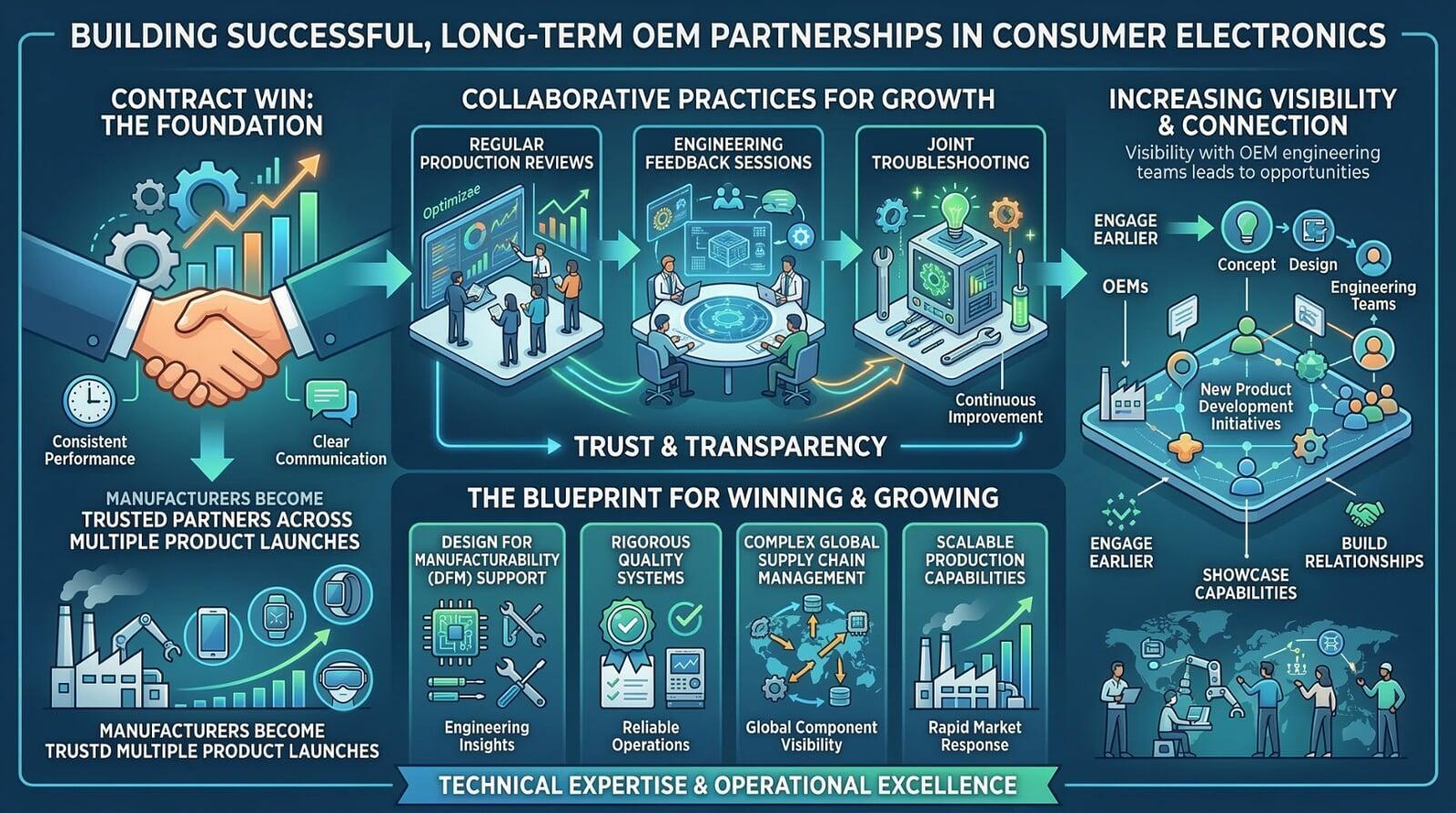
Winning a manufacturing contract is often the beginning of a long-term collaboration between an OEM and its manufacturing partner. Successful manufacturers focus on building trust through consistent performance, clear communication, and proactive problem-solving.
Many strong partnerships involve regular production reviews, engineering feedback sessions, and joint troubleshooting when challenges arise. These collaborative practices allow manufacturers to continuously improve production processes while strengthening relationships with OEM teams.
Manufacturers who demonstrate reliability and transparency often become trusted partners across multiple product launches. Instead of competing for individual projects, they are frequently invited to participate in new product development initiatives. In the consumer electronics industry, these long-term partnerships often provide a significant competitive advantage.
Conclusion
Winning consumer electronics manufacturing contracts requires much more than offering production capacity. The most successful manufacturers combine engineering insight with reliable operational processes and collaborative partnerships.
By supporting design for manufacturability, maintaining rigorous quality systems, managing complex global supply chains, and demonstrating scalable production capabilities, manufacturers position themselves as valuable partners for consumer electronics OEMs.
As consumer electronics products continue to evolve and development cycles become faster, manufacturers who combine technical expertise with operational excellence will play a central role in bringing the next generation of electronics innovation to market.
Manufacturers that want to win more consumer electronics manufacturing contracts need visibility with OEMs and engineering teams that are actively developing new products.
Platforms like Trustbridge help connect qualified manufacturers with companies seeking reliable partners for electronics production and product development. By participating in collaborative manufacturing ecosystems, suppliers can showcase their capabilities, engage earlier in product development discussions, and build relationships with innovative OEM teams.
For manufacturers looking to expand their role in the consumer electronics ecosystem, increasing visibility and demonstrating technical expertise can open the door to new partnerships and long-term manufacturing opportunities.
Frequently Asked Questions (FAQs)
1. What do consumer electronics OEMs look for in manufacturing partners?
OEMs typically evaluate manufacturers based on engineering collaboration, design for manufacturability expertise, quality management systems, and supply chain reliability. Manufacturers who can support both product development and scalable production are more likely to win long-term contracts.
2. Why is design for manufacturability important when winning manufacturing contracts?
Design for Manufacturability (DFM) helps ensure that products can be produced efficiently and reliably at scale. Manufacturers who provide DFM feedback during product development help OEMs reduce production complexity, prevent costly redesigns, and improve manufacturing yield.
3. How does supply chain reliability influence manufacturing contract decisions?
Consumer electronics products rely on globally sourced components such as semiconductors and sensors. Manufacturers that maintain strong supplier networks and monitor component availability help OEMs avoid production delays and maintain stable product launches.
4. How can manufacturers build long-term partnerships with consumer electronics OEMs?
Manufacturers build strong partnerships by delivering consistent product quality, communicating transparently, supporting engineering collaboration, and demonstrating the ability to scale production as product demand increases.