
6 Ways of Improving RFP Win Rates with Consumer Electronics OEMs
Introduction
Winning requests for proposals (RFPs) from consumer electronics OEMs has become increasingly competitive. Rapid innovation cycles, frequent product launches, and evolving consumer expectations mean that OEMs rely heavily on manufacturing partners who can deliver consistent quality, speed, and reliability. Many capable suppliers lose bids not because they lack manufacturing capability, but because their proposals fail to align with how procurement teams actually evaluate suppliers.
For manufacturers, improving RFP win rates requires understanding the broader decision-making process behind supplier selection. While pricing is important, OEM buyers also evaluate suppliers based on engineering expertise, production scalability, supply chain stability, quoting responsiveness, and the ability to collaborate during product development. Procurement teams want partners who can support both early design phases and long-term production programs.
Manufacturers that structure their operations around strong communication, transparent capabilities, and efficient quoting processes are better positioned to stand out during RFP evaluations. By aligning proposals with procurement expectations and demonstrating production readiness, suppliers can significantly improve their chances of winning contracts with consumer electronics OEMs.
Understanding How Consumer Electronics OEMs Evaluate Suppliers
Before improving RFP win rates, manufacturers must understand how consumer electronics OEMs evaluate supplier proposals. Procurement teams rarely make decisions based solely on cost. Instead, they rely on structured evaluation frameworks that allow them to compare suppliers based on reliability, capability, and long-term partnership potential.
These evaluation frameworks are designed to reduce sourcing risk and ensure supply chain stability throughout the product lifecycle. OEM buyers need suppliers that can meet tight deadlines, maintain quality consistency, and scale production as product demand grows. For this reason, procurement teams assess suppliers using clearly defined supplier selection criteria.
Aligning with Supplier Selection Criteria
Many manufacturers lose RFP opportunities because their proposals focus heavily on pricing while overlooking other important evaluation factors. In reality, many sourcing frameworks assign only limited weight to price alone. OEM buyers evaluate suppliers across multiple dimensions such as technical capability, production readiness, quality systems, and delivery reliability.
To align with supplier selection criteria, manufacturers should clearly highlight certifications, inspection systems, equipment capabilities, and previous project experience. Providing measurable metrics—such as first-pass yield, defect rates, or on-time delivery performance—helps procurement teams evaluate supplier reliability more confidently.
Demonstrating Operational Readiness
Operational readiness is another critical factor in RFP evaluations. Consumer electronics OEMs often move quickly from product design to pilot production and then to scaled manufacturing. Suppliers must demonstrate that they can support this transition without major disruptions.
Manufacturers that provide clear documentation about engineering capabilities, production capacity, and supply chain partnerships show that they are prepared for complex production programs. Transparent operational information reduces uncertainty for procurement teams and strengthens trust during the supplier evaluation process.
Strengthening Supplier Relationship Management with OEM Buyers
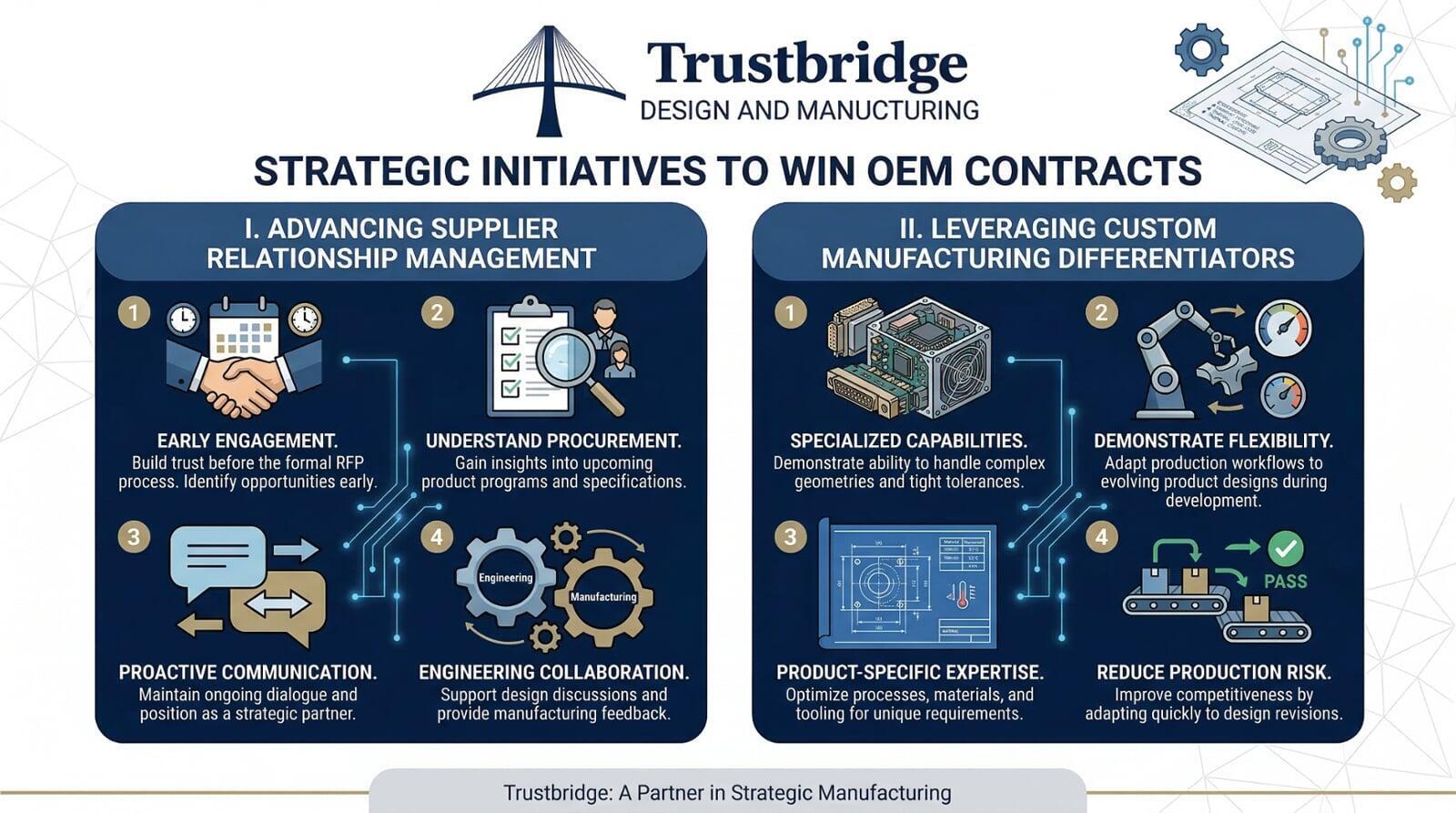
Winning an RFP rarely begins with the proposal itself. In many cases, suppliers that secure contracts have already established relationships with procurement teams before the formal sourcing process begins. OEM buyers often prefer working with suppliers they understand and trust, especially when launching new products under tight timelines.
Strong supplier relationship management helps manufacturers maintain ongoing communication with OEM buyers, understand upcoming sourcing opportunities, and position themselves as strategic partners rather than transactional vendors. Consistent engagement allows suppliers to better understand procurement expectations and technical requirements.
Building Early Communication with Procurement Teams
Manufacturers that engage early with procurement teams gain valuable insights into future product programs and sourcing priorities. Early discussions allow suppliers to understand technical specifications, delivery expectations, and production challenges before a formal RFP is released.
These conversations also allow suppliers to tailor proposals more effectively. Asking clarifying questions and identifying potential production considerations during the early stages demonstrates technical expertise and professionalism, which procurement teams value when evaluating suppliers.
Supporting Engineering Collaboration
Consumer electronics products often require close collaboration between OEM engineering teams and manufacturing partners. Many products involve tight tolerances, compact assemblies, and specialized materials that require manufacturing expertise early in the design phase.
Suppliers that actively support engineering discussions by providing design feedback, recommending manufacturing improvements, or suggesting material alternatives strengthen their position during RFP evaluations. This collaborative approach helps reduce production risks while reinforcing the supplier’s commitment to long-term product success.
Leveraging Custom Manufacturing Capabilities to Differentiate Proposals
Consumer electronics components frequently require specialized manufacturing processes and precise engineering execution. Components such as device housings, connectors, and structural assemblies often involve complex geometries and strict tolerance requirements. Suppliers that offer strong custom manufacturing capabilities can differentiate themselves by demonstrating their ability to handle specialized production challenges.
Custom manufacturing capabilities signal to OEM buyers that a supplier can adapt production processes to meet unique product specifications. This flexibility becomes particularly valuable during product development when designs are still evolving and engineering adjustments are common.
Supporting Product-Specific Engineering Requirements
OEM engineers look for manufacturing partners who understand the technical complexities of consumer electronics components. Producing precision housings, thermal management components, or structural frames often requires careful tooling strategies, material selection, and process optimization.
Suppliers that showcase experience with complex manufacturing projects and provide examples of previous technical challenges solved during production can strengthen credibility during the RFP process.
Demonstrating Manufacturing Flexibility
Another advantage of custom manufacturing is the ability to adapt production workflows as product designs change. Consumer electronics products frequently go through multiple design revisions before reaching final production.
Manufacturers that can quickly adjust tooling strategies, manufacturing processes, and supply chain inputs demonstrate the flexibility OEM buyers need during product development. This adaptability reduces production risk and improves supplier competitiveness during RFP evaluations.
Offering Small Batch Manufacturing for Prototyping and Early Production
Many consumer electronics products move through several development stages before reaching full production. Prototype validation, pilot runs, and limited production launches allow OEM engineering teams to test performance and refine product designs before scaling manufacturing.
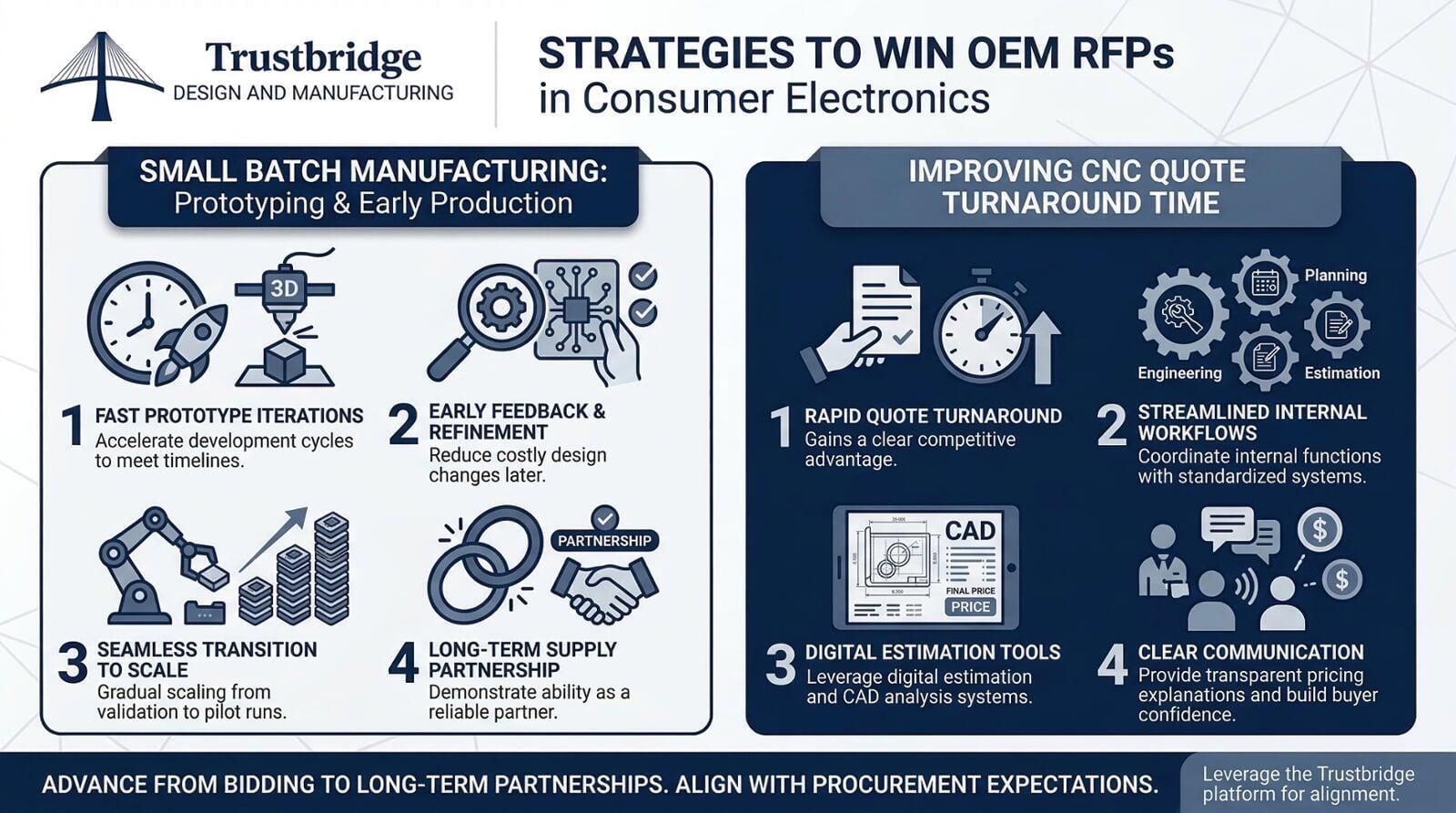
Suppliers that offer small batch manufacturing capabilities are often better positioned to support these early phases of product development. This capability allows OEM teams to iterate quickly while maintaining manufacturing consistency.
Supporting Rapid Prototyping Programs
Consumer electronics development cycles are typically fast-paced, requiring rapid prototype iterations to meet aggressive product launch timelines. Small batch manufacturing enables suppliers to produce limited quantities quickly, allowing engineering teams to evaluate functionality, durability, and performance.
This fast feedback loop accelerates development and reduces the likelihood of costly design changes later in the production process.
Bridging the Gap Between Prototyping and Production
Small batch manufacturing also helps bridge the transition between prototype validation and full production. Suppliers that can gradually scale manufacturing volumes after successful pilot runs provide OEM buyers with greater confidence in long-term production stability.
By supporting both early development and full production phases, manufacturers demonstrate their ability to act as long-term supply chain partners.
Improving CNC Quote Turnaround Time to Win Competitive RFPs
In competitive sourcing environments, responsiveness can significantly influence supplier selection. Procurement teams often evaluate multiple suppliers simultaneously, and manufacturers that deliver accurate quotes quickly gain a clear advantage.
Fast CNC quote turnaround time signals strong internal coordination between engineering, production planning, and cost estimation teams. It also demonstrates that the supplier has efficient quoting processes and well-organized operational workflows.
Streamlining Internal Quoting Workflows
Efficient quoting requires coordination across several internal functions. Engineering teams must review technical drawings, production planners must assess machine capacity, and cost estimators must calculate material and labor requirements.
Suppliers that implement standardized quoting workflows, digital estimation tools, and integrated CAD analysis systems can significantly reduce quoting time while maintaining accuracy.
Demonstrating Responsiveness to OEM Procurement Teams
Beyond speed, clear and responsive communication during the quoting process builds confidence with OEM buyers. Procurement teams value suppliers who answer technical questions quickly and provide transparent explanations of pricing assumptions.
Maintaining consistent communication throughout the RFP process signals professionalism and strengthens the supplier’s reputation as a reliable manufacturing partner.
Conclusion
Improving RFP win rates with consumer electronics OEMs requires more than submitting competitive pricing. Successful suppliers understand how procurement teams evaluate proposals and structure their operations accordingly. Aligning with structured supplier selection criteria, demonstrating production readiness, and maintaining strong communication with OEM buyers all play critical roles in supplier success.
Manufacturers that invest in supplier relationship management, highlight their custom manufacturing expertise, support small batch manufacturing, and improve CNC quote turnaround time position themselves as reliable partners within the consumer electronics supply chain. These capabilities help suppliers move beyond transactional bidding and build long-term partnerships with OEM customers.
In an industry defined by rapid innovation and tight product launch timelines, suppliers that combine technical expertise with operational efficiency stand out in competitive RFP environments and secure more consistent manufacturing opportunities.
If your manufacturing organization is looking to improve RFP success rates with consumer electronics OEMs, now is the time to evaluate how your internal processes support procurement expectations.
Strengthening supplier relationship management, optimizing quoting workflows, and clearly communicating your manufacturing capabilities can significantly improve your competitive positioning. Platforms like Trustbridge help connect manufacturers with OEM buyers while improving supplier visibility and alignment during the sourcing process.
Manufacturers that take a proactive approach to supplier communication, quoting efficiency, and production readiness not only win more RFPs—they build stronger partnerships and secure long-term growth in the consumer electronics manufacturing ecosystem.
Frequently Asked Questions (FAQs)
1. What factors help manufacturing suppliers win more RFPs from consumer electronics OEMs?
OEM procurement teams evaluate suppliers based on multiple criteria, including manufacturing capability, quality systems, engineering collaboration, delivery reliability, and responsiveness during the quoting process. Suppliers that clearly demonstrate these strengths and align with OEM sourcing expectations are more likely to succeed in competitive RFP evaluations.
2. Why is supplier relationship management important for improving RFP win rates?
Strong supplier relationship management helps manufacturers build trust and maintain consistent communication with OEM procurement teams. When suppliers engage early, understand buyer expectations, and collaborate during product development, they are better positioned to submit proposals that align with OEM priorities.
3. How does faster CNC quote turnaround time influence RFP success?
Fast and accurate CNC quote turnaround time shows that a manufacturer has efficient internal processes and strong coordination between engineering and production teams. OEM buyers often evaluate several suppliers at once, so manufacturers that provide clear and timely quotes gain a competitive advantage.
4. Why do OEMs value suppliers that offer custom and small batch manufacturing?
Custom manufacturing and small batch production allow suppliers to support prototype development and early production runs before scaling to higher volumes. OEMs prefer suppliers who can handle both early-stage product development and full-scale manufacturing because it ensures smoother transitions and reduces supply chain risk.