5 Ways the Best Smart Home & Consumer Hardware Procurement Teams Build Resilient Supply Chains
Leading smart home and consumer hardware procurement teams strengthen supply chains through supplier diversification, regional sourcing, improved component visibility, strong supplier relationships, and close alignment with manufacturing. These strategies reduce disruption risk, improve supply continuity, and enable companies to scale production more reliably in dynamic market conditions.
Introduction
As the smart home and consumer hardware industry continues to expand, procurement teams are under growing pressure to build supply chains that can withstand disruption while supporting rapid innovation. Recent global events—including semiconductor shortages, logistics bottlenecks, and shifting geopolitical conditions—have exposed how vulnerable hardware supply chains can be.
At the same time, demand for connected devices continues to rise, making supply chain resilience a critical priority for procurement leaders. Companies can no longer rely solely on traditional sourcing strategies focused only on cost reduction.
The best procurement teams understand that resilience comes from proactively designing supply chains that can adapt to changing conditions. This includes supplier diversification, regional sourcing strategies, improved component visibility, stronger supplier relationships, and tighter coordination with manufacturing operations.
Please read on to explore the key strategies leading procurement teams use to strengthen supply chains in the smart home and consumer hardware industry.
Moving Beyond Cost-Driven Procurement
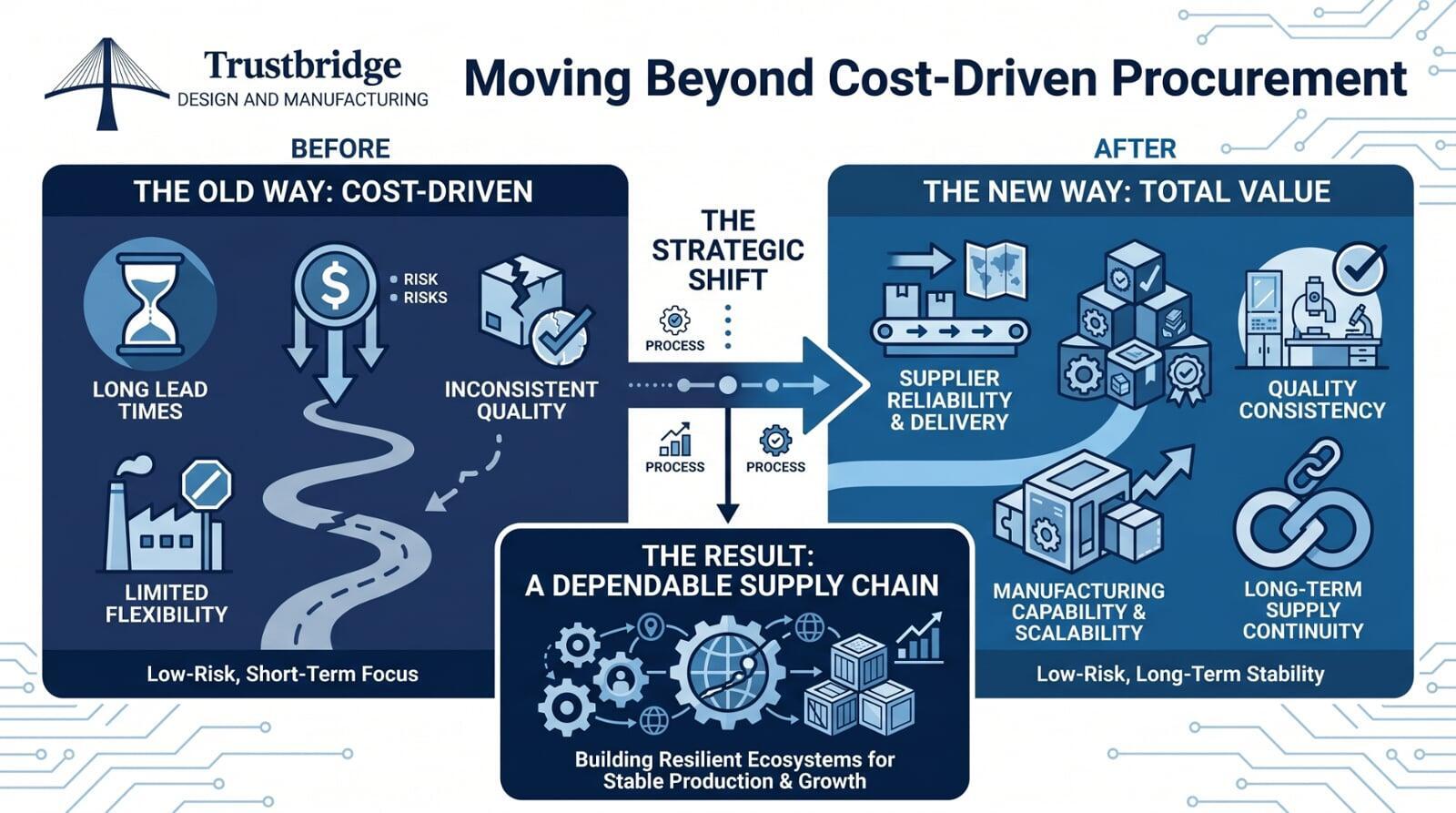
Traditional procurement models often prioritized cost reduction above all else. However, in the smart home and consumer hardware industry, this approach is no longer enough. Selecting the lowest-cost supplier can sometimes result in longer lead times, inconsistent quality, or limited flexibility during periods of high demand.
Leading procurement teams now focus on total value rather than upfront pricing alone. This includes evaluating supplier reliability, delivery consistency, manufacturing capability, and long-term supply continuity.
By shifting toward value-based procurement strategies, organizations can build more dependable and resilient supply chains that support stable production over time.
Evaluating Suppliers Beyond Unit Cost
Low-cost sourcing may reduce short-term expenses, but it can increase long-term operational risk. Procurement teams must assess suppliers based on delivery performance, quality consistency, responsiveness, and scalability.
A supplier with slightly higher pricing but stronger operational reliability can often reduce the likelihood of production disruptions and costly delays.
Prioritizing Long-Term Supply Stability
Supply continuity has become a critical procurement objective. Leading teams prioritize suppliers that demonstrate stable operations, strong inventory management, and proven manufacturing capacity.
This approach improves predictability and helps organizations respond more effectively during market fluctuations.
Building Procurement Strategies Around Total Value
Modern procurement decisions involve balancing cost, quality, lead times, flexibility, and risk mitigation. Focusing on total value rather than lowest price creates stronger supplier ecosystems and more resilient supply chains.
This shift allows companies to better support long-term growth and production scalability.
Supplier Diversification and Risk Mitigation
Supplier diversification is one of the most effective strategies for improving supply chain resilience. Relying heavily on a single supplier for critical components creates significant vulnerability during global disruptions.
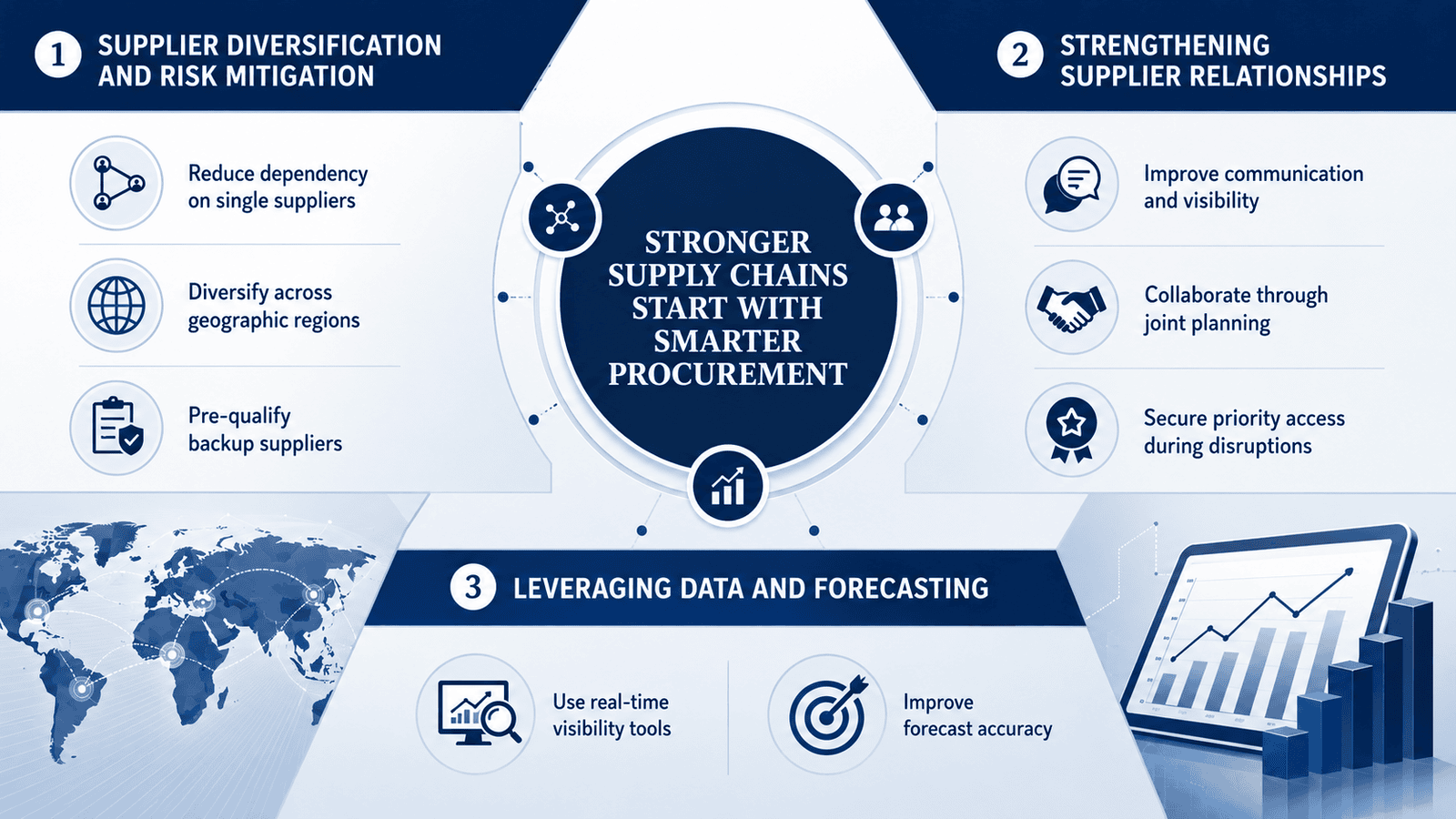
Top procurement teams reduce this risk through dual sourcing strategies, geographic diversification, and pre-qualified backup suppliers. These approaches create greater flexibility and improve continuity when disruptions occur.
Diversified supplier networks also help companies adapt more effectively to shifting demand patterns and changing market conditions.
Reducing Dependency on Single Suppliers
Single-source dependencies can create major operational risks if suppliers experience capacity issues, shortages, or logistics disruptions.
By maintaining multiple sourcing options, procurement teams reduce the likelihood of production stoppages and improve supply continuity.
Diversifying Across Geographic Regions
Regional diversification helps minimize the impact of localized disruptions such as transportation delays, political instability, or natural disasters.
Sourcing from suppliers across different regions creates greater operational flexibility and improves resilience across the broader supply chain.
Pre-Qualifying Backup Suppliers
Leading procurement teams proactively evaluate and qualify secondary suppliers before disruptions occur.
Having approved backup suppliers in place enables faster transitions during emergencies and reduces delays associated with supplier onboarding.
Strengthening Supplier Relationships
Resilient supply chains are built on strong supplier partnerships. Procurement teams that maintain close communication and collaboration with suppliers gain better visibility into production schedules, capacity limitations, and emerging risks.
Strong supplier relationships also improve responsiveness and create a more stable supply ecosystem over time.
Improving Communication and Visibility
Regular supplier engagement helps procurement teams stay informed about operational changes, inventory constraints, and production timelines.
Improved communication enables faster problem-solving and more proactive risk management.
Collaborating Through Joint Planning
Many leading procurement teams conduct joint forecasting, quarterly business reviews, and collaborative planning sessions with suppliers.
These initiatives strengthen alignment between both parties and improve overall supply chain coordination.
Securing Priority Access During Disruptions
During periods of constrained supply, suppliers often prioritize long-term strategic customers.
Strong supplier relationships can improve access to critical components and reduce the impact of shortages on production schedules.
Leveraging Data and Forecasting
Advanced procurement organizations increasingly rely on data and forecasting tools to improve decision-making and manage supply chain risks.
Through ERP integrations, demand planning systems, and real-time visibility platforms, procurement teams can better monitor inventory levels, supplier performance, and market conditions.
This data-driven approach enables organizations to anticipate disruptions earlier and make more informed sourcing decisions.
Using Real-Time Visibility Tools
Real-time supply chain visibility allows procurement teams to monitor inventory, shipment status, and supplier performance more accurately.
This helps teams respond quickly to delays or shortages before they escalate into larger operational issues.
Improving Forecast Accuracy
Demand forecasting helps procurement teams align sourcing decisions with expected production requirements.
More accurate forecasting reduces the risk of both inventory shortages and excess stock accumulation.
Supporting Smarter Procurement Decisions
Data-driven procurement strategies improve supplier selection, inventory management, and sourcing optimization.
Access to actionable insights allows procurement leaders to make faster and more confident operational decisions.
Aligning Procurement with Manufacturing
Close coordination between procurement and manufacturing is essential for maintaining efficient production operations.
When sourcing decisions align with manufacturing schedules and operational requirements, organizations can reduce shortages, minimize downtime, and improve overall production efficiency.
Leading companies increasingly integrate procurement and manufacturing planning processes to create more responsive operations.
Coordinating Sourcing with Production Planning
Procurement teams must ensure that materials and components are available when manufacturing requires them.
Better coordination reduces disruptions and helps production lines operate more consistently.
Using Shared KPIs and Integrated Systems
Shared performance metrics and integrated planning systems improve collaboration between procurement and manufacturing teams.
This alignment helps organizations identify risks earlier and respond more effectively to changing production demands.
Reducing Operational Disruptions
Without strong alignment, companies may face component shortages, underutilized production capacity, or manufacturing delays.
Collaborative planning creates a smoother and more efficient production environment.
Conclusion
Building resilient supply chains in the smart home and consumer hardware industry requires a proactive and strategic approach.
The most effective procurement teams move beyond cost-focused sourcing and instead prioritize supplier diversification, collaborative supplier relationships, data-driven decision-making, and close manufacturing alignment.
As global supply chains continue to evolve, resilience will remain a critical differentiator for successful organizations. Procurement teams that invest in these capabilities will be better positioned to maintain continuity, support innovation, and drive long-term growth.
Resilient supply chains are built through better supplier visibility, smarter sourcing decisions, and stronger collaboration across the manufacturing ecosystem.
Trustbridge helps procurement teams connect with reliable manufacturing partners, diversify supplier networks, and engage earlier in the sourcing process. With access to vetted suppliers and improved sourcing visibility, procurement leaders can reduce risk and make more confident decisions.
For companies looking to strengthen supply chain resilience in the smart home and consumer hardware industry, now is the time to take a more strategic approach.
Frequently Asked Questions (FAQs)
1. What is a resilient supply chain in smart home manufacturing?
A resilient supply chain is one that can adapt to disruptions, maintain production continuity, and respond quickly to changes in demand through strategies like supplier diversification and strong planning.
2. Why is supplier diversification important in procurement?
Supplier diversification reduces dependency on a single source, helping companies avoid production delays and maintain supply continuity during disruptions.
3. How do procurement teams manage supply chain risks?
They use strategies such as multi-sourcing, demand forecasting, inventory planning, and close supplier collaboration to identify and mitigate risks early.
4. How does procurement align with manufacturing operations?
Procurement aligns with manufacturing by coordinating sourcing decisions with production schedules, ensuring component availability, and supporting efficient production workflows.