What Separates a Machine Shop That Grows from One That Just Stays Busy: The Full Framework
Many machine shops stay busy throughout the year, but being fully booked does not always lead to sustainable business growth. Long-term success comes from more than keeping machines running it requires a clear strategy, efficient operations, strong customer relationships, data-driven decision-making, and continuous improvement. Machine shops that consistently grow build systems that improve profitability, strengthen competitiveness, and create a foundation for future expansion rather than simply maintaining a full production schedule.
Introduction
A full production schedule can make a machine shop appear successful. Machines are running, operators are busy, and new jobs continue to arrive. However, many shops that seem to be thriving on the surface struggle to increase profitability, expand capacity, or attract higher-value customers. Staying busy is important, but it is only one indicator of business performance.
The difference between a shop that simply stays occupied and one that achieves sustainable growth often comes down to how the business is managed. High-performing manufacturers understand that growth is measured not by how many hours the machines are running, but by how effectively the organization improves its capabilities, strengthens customer relationships, and builds a resilient business that can adapt to changing market demands.
This framework explores the business principles that consistently separate growing machine shops from those that remain busy without making meaningful progress. Whether you're looking to improve profitability, optimize operations, or position your company for long-term success, these strategies provide a roadmap for building a stronger manufacturing business.
Strategic Foundations That Drive Machine Shop Business Growth
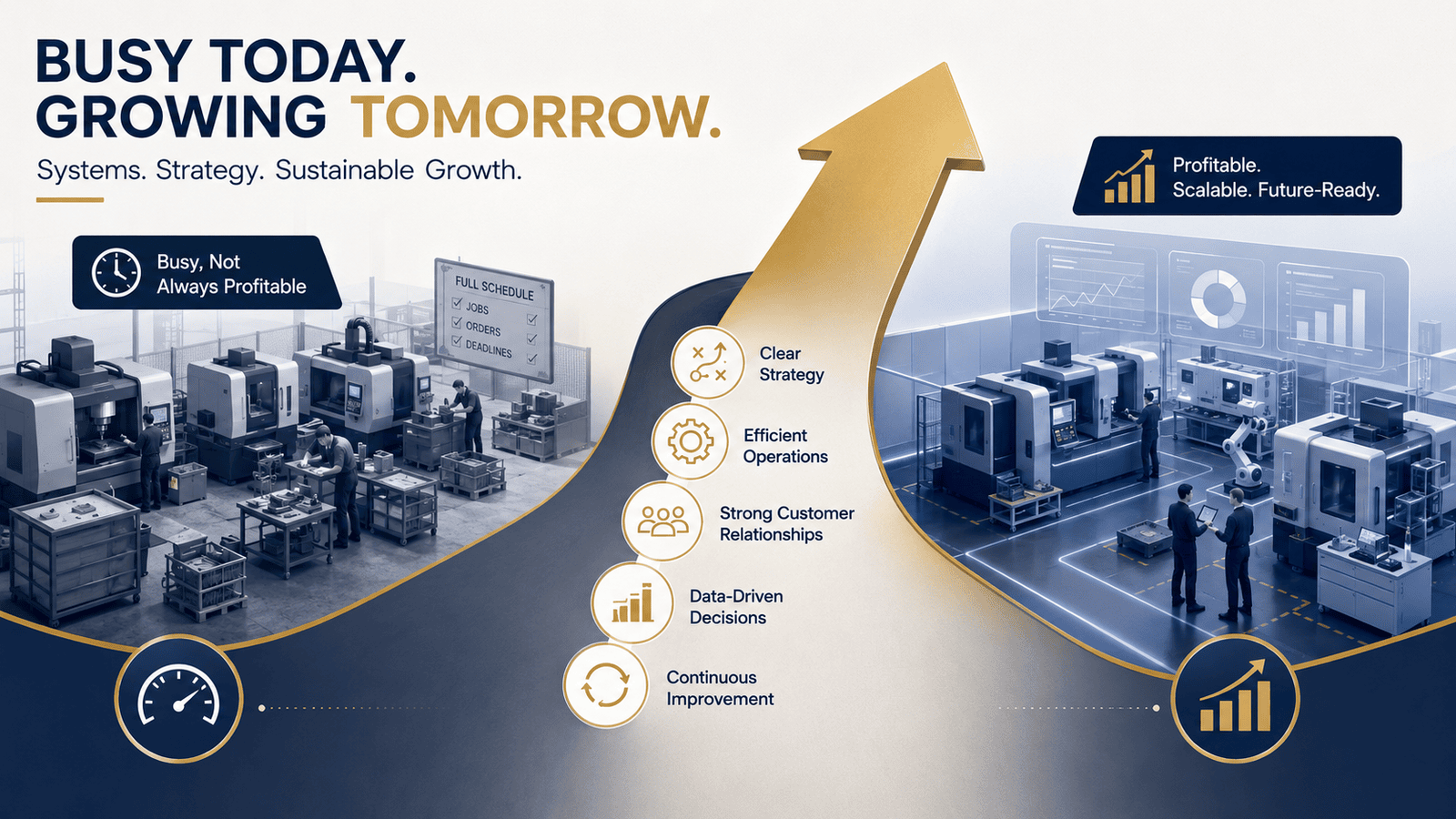
Sustainable machine shop business growth begins long before new equipment is purchased or production capacity is expanded. The strongest manufacturers build a solid business foundation by making intentional decisions about the customers they serve, the markets they focus on, and the operational systems that support consistent performance. Rather than reacting to every opportunity that comes through the door, successful shops develop repeatable processes that allow them to deliver reliable results while continually improving their operations, reducing unnecessary complexity and creating a business that can scale without sacrificing quality or customer satisfaction.
Building a Strategy Around the Right Customers and Specialized Markets
Many machine shops fall into the habit of accepting every opportunity that comes their way. While this approach may keep machines occupied in the short term, it often leads to inconsistent margins, scheduling conflicts, production bottlenecks, and unnecessary operational complexity. Growing shops take a different approach: they develop a clear manufacturing strategy that defines the industries they want to serve, the types of projects that align with their expertise, and the customers who best match their long-term business goals, evaluating opportunities based on profitability, production requirements, technical fit, and long-term potential rather than available capacity alone.
Many of the fastest-growing shops take this a step further by specializing within specific industries, such as aerospace, medical devices, industrial equipment, or precision manufacturing. Specialization enables businesses to develop deeper technical knowledge, refine their processes, and build a reputation for delivering consistent results — and customers are often willing to pay a premium for suppliers that understand the unique requirements of their industry, a competitive advantage that is difficult for generalist shops to replicate.
Operational Excellence Becomes Part of Everyday Decision-Making
Growth is rarely driven by one major investment or breakthrough. Instead, it is built through consistent execution and a commitment to improving everyday operations. Machine shops that continue to grow establish repeatable systems that reduce variability, improve quality, and create predictable production outcomes, standardizing their workflows and encouraging continuous improvement across every department so that operational excellence becomes part of the company's culture instead of an occasional initiative.
Standardized Processes and Continuous Improvement Drive Performance
Documented machining procedures, setup instructions, inspection methods, and preventive maintenance schedules help ensure that work is performed consistently regardless of who is operating the equipment. Standardization reduces variation between shifts, minimizes errors, and creates more reliable production outcomes, while also shortening employee training time and allowing new team members to become productive more quickly.
High-performing machine shops also regularly evaluate their production performance to identify inefficiencies and eliminate bottlenecks before they become larger problems, rather than waiting for a major disruption. Small, incremental improvements in setup procedures, workflow organization, tooling strategies, and quality processes often deliver greater long-term value than occasional large-scale investments, helping businesses remain competitive while adapting to changing customer demands.
Strong CNC Shop Management Maximizes Capacity
Expanding production does not always require purchasing additional equipment. Many successful manufacturers first focus on maximizing the performance of the machines they already own. Effective CNC shop management emphasizes better planning, improved utilization, reduced downtime, and more efficient production scheduling to increase output without compromising quality — creating additional capacity while controlling costs and improving overall operational performance.
Scheduling and Preventive Maintenance Maximize Uptime
Efficient scheduling plays a critical role in maximizing machine utilization. Well-planned production schedules reduce idle time, minimize unnecessary machine changeovers, and balance customer priorities with available capacity, so operators spend more time machining parts and less time waiting for materials, tooling, or instructions.
Unexpected equipment failures can disrupt production schedules, delay customer orders, and increase operating costs, which is why growing machine shops treat preventive maintenance as a strategic investment rather than a routine chore. Routine inspections, scheduled servicing, and proactive equipment care help extend machine life, reduce costly breakdowns, and maintain the consistent production capacity that dependable delivery performance depends on.
Operational Systems That Turn Busy Shops Into Growing Businesses
Once a machine shop has established a clear strategic direction, long-term growth depends on how effectively the business executes its day-to-day operations. High-performing manufacturers build systems that provide visibility into performance, eliminate inefficiencies, strengthen customer relationships, and support informed decision-making — helping leaders identify opportunities for improvement before they become costly problems and deliver greater value without simply adding more work.
Manufacturing KPIs Guide Better Decisions
Many busy machine shops evaluate success based on intuition or production volume, but sustainable growth requires decisions backed by reliable data. Revenue alone provides only a partial picture of business health — a shop may generate strong sales while still experiencing declining profitability, inconsistent quality, or customer dissatisfaction. Growing machine shops instead monitor key operational metrics such as on-time delivery, first-pass yield, machine utilization, setup time, scrap rates, quoting success, customer retention, and overall equipment effectiveness, giving leaders a far more complete view of how the business is actually performing.
This data also establishes clear expectations across the organization and creates accountability, helping teams understand how their daily work contributes to broader business objectives. Reliable numbers support better investment decisions related to equipment purchases, staffing, automation, and production planning, so leaders can prioritize improvements that deliver measurable value instead of relying on assumptions or reacting to problems only after they occur.
Production Efficiency and Workflow Optimization Expand Capacity
Production efficiency is about creating more value with the resources already available — not simply working faster. The most successful machine shops continually refine their operations to reduce waste, improve throughput, and maximize available capacity while maintaining high quality standards. Setup time is often one of the biggest opportunities here: lengthy machine setups reduce productive machining time and increase costs, and even small improvements in standardized tooling, modular fixturing, improved CNC programming, and documented setup procedures can significantly expand available capacity without requiring additional equipment.
Every stage of production also influences overall performance, not just time spent on the machine. Material movement, job routing, inspection sequencing, tooling availability, and communication between departments all affect how efficiently work moves through the shop. Optimizing these workflows minimizes unnecessary waiting, reduces bottlenecks, and creates a smoother production process from raw material to finished part — improving throughput, shortening lead times, and providing customers with more reliable delivery schedules.
Customer Relationships Drive Long-Term Machine Shop Growth
Sustainable growth depends on more than acquiring new business. The strongest machine shops recognize that long-term success is built by developing lasting customer relationships that generate repeat work and create opportunities for deeper collaboration. When customers trust a supplier's ability to consistently deliver quality products, communicate effectively, and solve manufacturing challenges, those relationships often become more valuable than competing on price alone.
Reliability and Engineering Collaboration Build Trust
Customers want manufacturing partners they can depend on to meet quality expectations, deliver on schedule, and communicate proactively throughout every project. Consistent performance reduces uncertainty and strengthens confidence between suppliers and customers — and over time, shops that consistently deliver on their commitments often earn preferred supplier status and additional business through long-term partnerships.
The most successful machine shops go a step further by contributing technical expertise throughout the product development process. By offering design for manufacturability (DFM) recommendations, process improvements, and engineering feedback, they help customers reduce costs, improve product quality, and simplify production — transforming the relationship from a transactional supplier arrangement into a strategic partnership that increases loyalty and creates opportunities for future projects.
Growing Shops Invest in People and Technology Together
Technology continues to reshape modern manufacturing, but long-term growth depends on how effectively technology and people work together. Advanced equipment and digital systems deliver the greatest value when supported by skilled employees who understand how to use them effectively. Growing machine shops recognize that investing in workforce development is just as important as investing in new technology — building both capabilities simultaneously creates a stronger, more adaptable business.
Employee Development and Smart Technology Work Together
Well-trained operators, programmers, quality inspectors, and supervisors play a critical role in improving operational performance. Ongoing training enhances technical expertise while strengthening problem-solving, communication, and quality management skills, and employees who understand both manufacturing processes and business objectives are better equipped to identify improvement opportunities.
Modern ERP systems, production monitoring software, automation, digital work instructions, and real-time reporting provide greater visibility across manufacturing operations, helping leaders monitor production, allocate resources more effectively, and respond more quickly to changing customer requirements. When implemented thoughtfully, technology supports faster and more informed decision-making without replacing the experience and judgment of skilled manufacturing professionals — instead enabling teams to work more efficiently while maintaining flexibility.
Conclusion
A full production schedule is often seen as a sign of success, but sustained business growth requires much more than keeping machines running. Shops that consistently outperform their competitors create a business that is built on thoughtful planning, disciplined execution, and a willingness to improve every aspect of their operations. They make decisions with the future in mind, balancing customer needs, operational performance, financial health, and workforce development rather than focusing solely on today's workload.
Many machine shops experience periods of high demand, but those that continue to grow are the ones that turn busy periods into opportunities to strengthen their business. They refine their processes, build lasting customer relationships, invest in their people, and use data to make smarter decisions. These efforts create a more resilient organization that can adapt to changing market conditions while delivering consistent value to customers.
Ultimately, the machine shops that achieve long-term success are those that view growth as an ongoing business discipline rather than a byproduct of having more work. By continually improving how the business operates, they build stronger customer partnerships, create greater operational resilience, and position themselves to succeed in an increasingly competitive manufacturing industry.
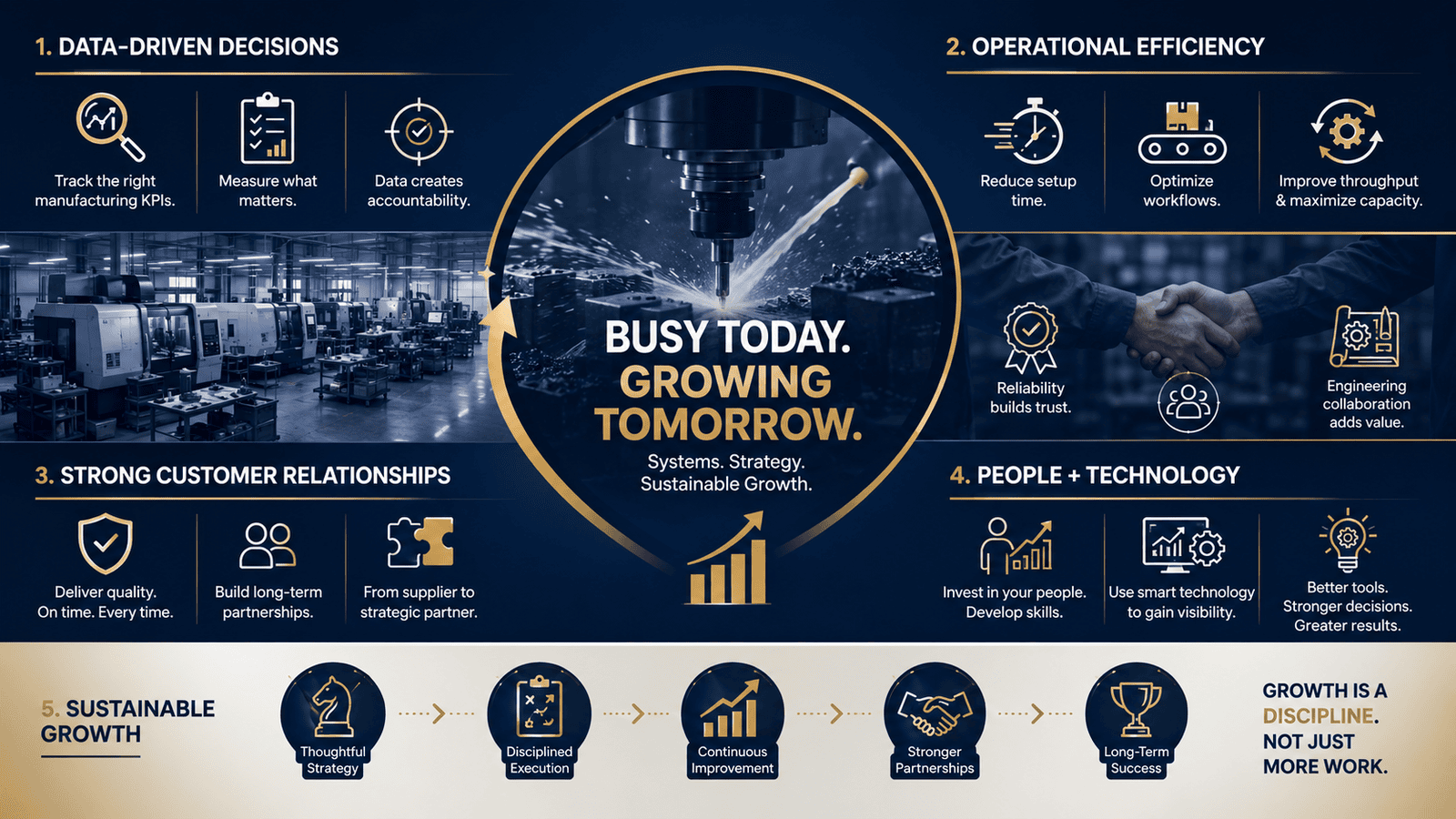
Whether your machine shop is operating at full capacity or preparing for its next stage of growth, now is the time to evaluate the systems that support your business. Sustainable machine shop business growth comes from making deliberate improvements across strategy, operations, customer relationships, and performance management—not simply accepting more work.
Take a closer look at how your shop plans production, measures success, develops employees, and serves customers. Small improvements made consistently can lead to significant gains in profitability, efficiency, and long-term competitiveness.
Businesses that invest in stronger processes today are better prepared to navigate changing customer demands, embrace new technologies, and create lasting value for both their teams and their customers. The goal isn't just to stay busy—it's to build a machine shop that continues to grow, adapt, and succeed for years to come.
Frequently Asked Questions
1. What is the difference between a busy machine shop and a growing machine shop?
A busy machine shop focuses on keeping machines running and filling production schedules, while a growing machine shop builds systems that improve profitability, operational efficiency, customer relationships, and long-term competitiveness. Sustainable growth comes from strategic planning and continuous improvement — not simply having more work.
2. What are the most important strategies for machine shop business growth?
Successful machine shop business growth is driven by a clear business strategy, operational excellence, strong CNC shop management, data-driven decision-making, customer-focused engineering collaboration, and ongoing investment in both people and technology. Together, these factors create a scalable and resilient manufacturing business.
3. Which manufacturing KPIs should machine shops track to support long-term growth?
Growing machine shops monitor KPIs such as machine utilization, on-time delivery, first-pass yield, scrap rates, setup time, overall equipment effectiveness (OEE), customer retention, and quoting success. These metrics provide valuable insights that help improve productivity, profitability, and operational performance.
4. Why are customer relationships important for sustainable machine shop growth?
Long-term customer relationships generate repeat business, improve revenue stability, and create opportunities for engineering collaboration. Machine shops that consistently deliver quality, communicate effectively, and provide manufacturing expertise often become trusted partners, giving them a competitive advantage beyond price alone.