
How the Best Consumer Electronics Engineers Design Products that Scale to Production
Many consumer electronics products begin as promising prototypes but encounter significant challenges when transitioning to large-scale production. A prototype may function perfectly in a controlled development environment, yet reveal design limitations when hundreds or thousands of units must be manufactured consistently. Engineers who understand this transition recognize that successful product design must account for production realities from the earliest stages of development.
This challenge is particularly common in startup hardware companies and emerging consumer device brands. A prototype might work flawlessly during testing, but when production begins, engineers may discover that enclosure tooling must be redesigned, assembly processes are more complex than expected, or critical components are difficult to source at scale. These challenges can delay product launches and increase development costs.
For this reason, the most effective engineers design products not only for performance but also for scalable manufacturing.
Designing with Manufacturability in Mind
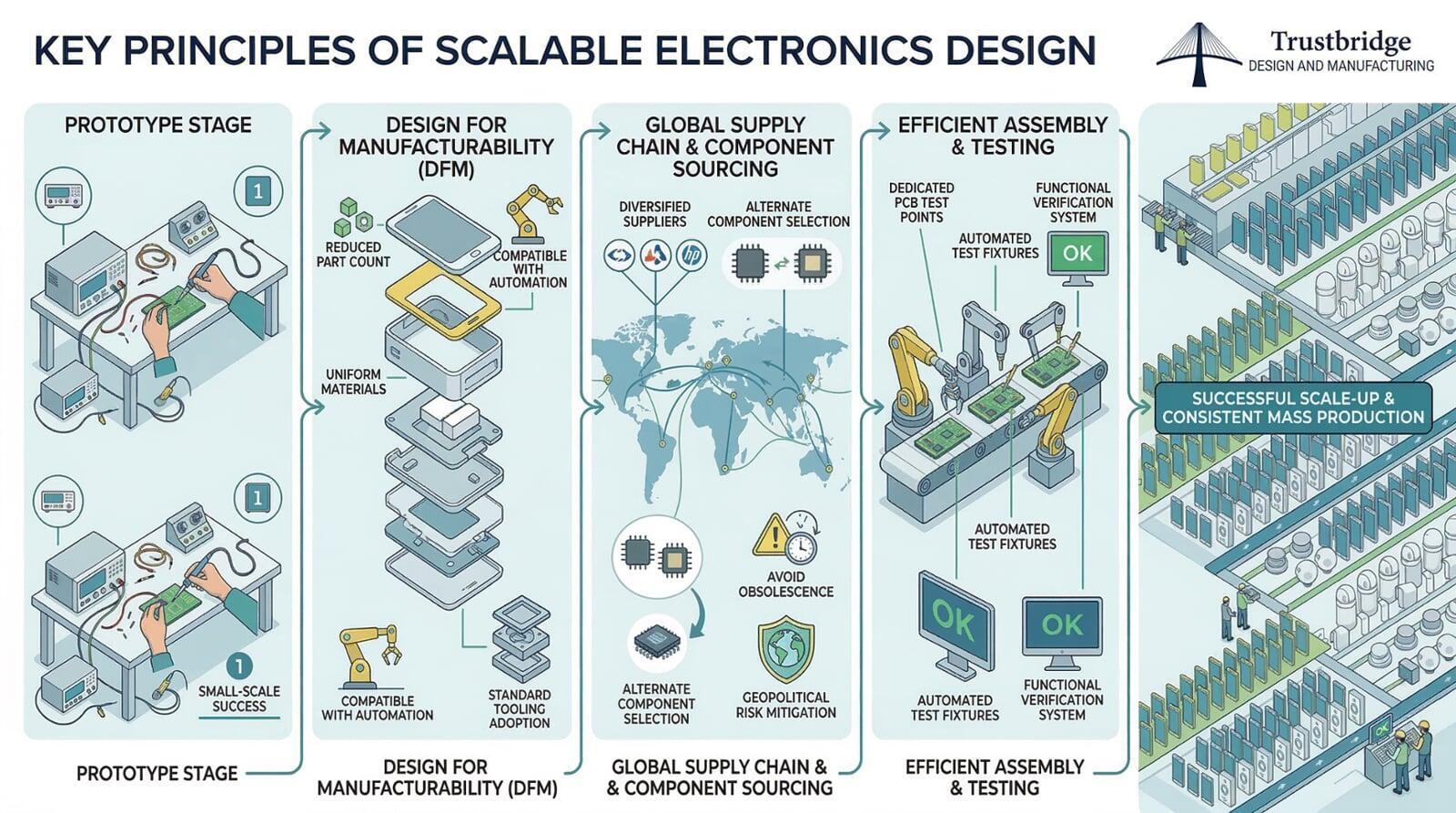
Leading consumer electronics engineers approach product development with a strong focus on design for manufacturability (DFM). This philosophy emphasizes designing components and assemblies in ways that simplify fabrication, reduce production complexity, and improve overall reliability. Engineers consider factors such as material behavior, tooling limitations, and assembly requirements when creating product designs.
In practice, this often means reducing the total number of parts in a product, standardizing materials across multiple components, and designing parts that are compatible with automated manufacturing processes. For example, minimizing unique fasteners or designing plastic components that can be molded using standard tooling can significantly simplify production.
A common engineering guideline in DFM is to design parts so they can be manufactured using widely available processes without requiring specialized tooling or excessive tolerances. By integrating manufacturability considerations into the design process, engineers ensure that products can be produced efficiently without sacrificing performance.
Considering Supply Chain Constraints During Design
Consumer electronics products often rely on specialized components that must be sourced from global suppliers. Engineers who design products with scalability in mind carefully evaluate component availability and long-term supply stability. They aim to select components that are widely available and supported by multiple suppliers whenever possible. This approach helps prevent supply disruptions that could delay production or increase costs.
Several supply chain risks can affect electronics manufacturing. Components may become obsolete, certain parts may have long lead times, or geopolitical disruptions can temporarily limit availability from specific regions. Engineers who account for these risks during the design stage can reduce the likelihood of production interruptions.
Another effective strategy is designing with alternate components in mind. Selecting standardized components and ensuring compatibility with multiple suppliers makes it easier to substitute parts if supply issues arise. This flexibility can significantly improve a product’s ability to scale smoothly into mass production.
Designing for Efficient Assembly and Testing
Another critical factor in scalable product design is the ease with which products can be assembled and tested. Engineers must consider how each component will be installed, connected, and validated during the manufacturing process. Products that are designed with clear assembly workflows and accessible testing points tend to move through production lines more efficiently.
Testing considerations are equally important. Engineers often include dedicated test points on printed circuit boards so automated test fixtures can quickly verify electrical performance during production. Functional verification systems are also commonly used to confirm that devices operate correctly before they leave the factory.
Designing products with assembly and testing efficiency in mind helps improve production line throughput, reduce manufacturing errors, and maintain consistent product quality.
Collaboration Between Engineering and Manufacturing Teams
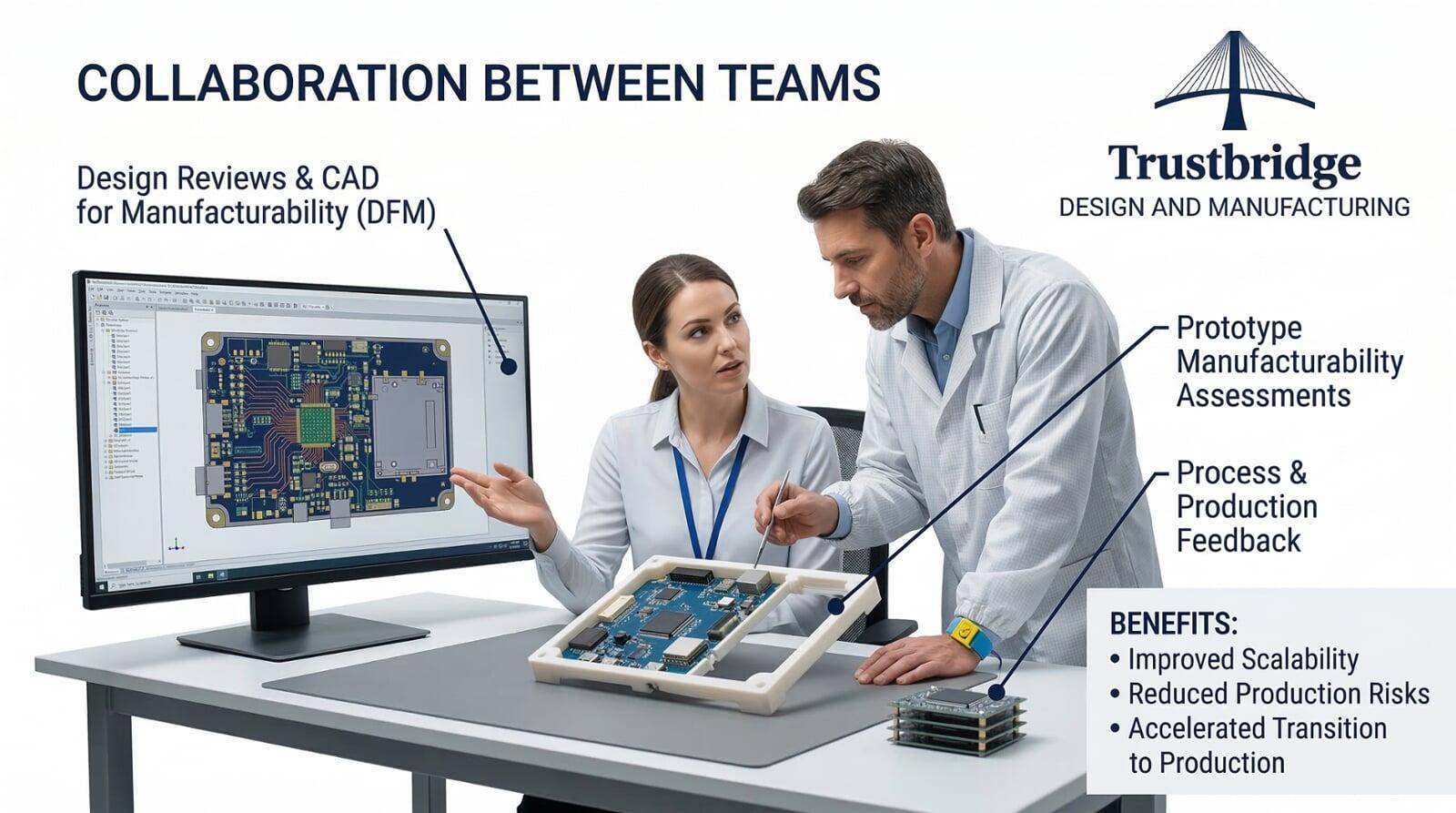
One of the most important practices among experienced consumer electronics engineers is maintaining close collaboration with manufacturing specialists throughout the design process. These specialists often include process engineers and production engineers who understand the capabilities and limitations of manufacturing systems.
Early manufacturing feedback can reveal potential production challenges before designs are finalized. For example, engineers may conduct design reviews with manufacturing teams to evaluate how easily parts can be fabricated and assembled. Prototype manufacturability assessments are another common practice used to identify design changes that can simplify production.
By involving manufacturing experts early in product development, engineering teams can refine their designs in ways that improve scalability, reduce production risks, and accelerate the transition from prototype to full production.
Conclusion
Designing consumer electronics products that scale successfully requires engineers to balance innovation with practical manufacturing considerations. Engineers who integrate manufacturability, supply chain planning, and production workflows into their design strategies are better positioned to bring reliable products to market.
As the pace of consumer electronics development continues to accelerate, companies that design with scalable production in mind gain a significant competitive advantage. Products that are optimized for manufacturing can move from prototype to production faster, experience fewer supply chain disruptions, and reach the market with greater reliability.
For modern engineering teams, the ability to design for scalable production is no longer just a technical skill—it is a strategic capability that helps organizations launch products faster and reduce production risk.
Frequently Asked Questions (FAQs)
1. Why do many consumer electronics prototypes struggle to scale into production?
Prototypes are typically built using small-batch methods and controlled testing environments. When products move to large-scale production, challenges such as tooling limitations, assembly complexity, and component availability often emerge. These issues can require redesigns, delay launches, and increase manufacturing costs.
2. What is Design for Manufacturability (DFM) and why is it important for consumer electronics engineers?
Design for Manufacturability (DFM) is an engineering approach that focuses on designing products so they can be produced efficiently at scale. By considering manufacturing processes, tooling capabilities, and production tolerances during the design phase, engineers can reduce production complexity, lower costs, and improve product reliability.
3. How do supply chain constraints influence consumer electronics product design?
Consumer electronics products rely on components sourced from global suppliers. Engineers must consider factors such as component lead times, supplier availability, and potential obsolescence when selecting parts. Designing with standardized components and alternate sourcing options helps reduce the risk of production disruptions.
4. Why is designing for assembly important when scaling electronics production?
Products designed for efficient assembly move through production lines faster and with fewer errors. Engineers often simplify assembly by reducing part counts, using standardized fasteners, and designing components that align easily. These practices improve manufacturing efficiency and help maintain consistent product quality at scale.