
7 Ways Procurement Powers Consumer Electronics from Design to Delivery
Procurement powers consumer electronics manufacturing by aligning with product development, selecting and qualifying suppliers, managing sourcing and contracts, overseeing production, mitigating risks, and building strategic supplier relationships—ensuring cost efficiency, quality, and timely delivery from concept to final delivery.
Introduction
The consumer electronics (CE) industry—characterized by rapid New Product Introduction (NPI: New Product Introduction) cycles and short product lifespans—operates at a fast pace, driven by continuous innovation and evolving customer expectations. Products such as smartphones, wearables, and smart home devices rely on the seamless integration of electronics, mechanical components, and advanced materials.
Behind this complexity, procurement plays a critical role in moving products from early concept to final delivery. It is not just a purchasing function—it is a strategic partner connecting engineering, suppliers, and manufacturing operations.
Procurement powers consumer electronics by aligning with product development, selecting and managing suppliers, controlling costs, and ensuring smooth production and delivery—making it essential to achieving speed, quality, and scalability.
Please read on to understand the seven key ways procurement drives success across the entire lifecycle.
The Role of Procurement Across the Product Lifecycle
Procurement is embedded across every stage of the consumer electronics lifecycle—where iterative validation stages such as EVT (Engineering Validation Testing), DVT (Design Validation Testing), and PVT (Production Validation Testing) ensure products are production-ready—from initial design collaboration to mass production and final delivery.
Rather than functioning as a downstream role, procurement acts as the bridge between design intent and manufacturing execution. Early and continuous involvement ensures that design decisions align with supplier capabilities, cost targets, and production realities.
This lifecycle approach reduces delays, minimizes redesigns, and supports efficient scaling from prototype builds to full production.
Aligning Procurement with Product Development
Procurement teams collaborate closely with engineering during the early stages of product development. This ensures sourcing decisions align with design requirements, material specifications, and production goals.
Early involvement enables procurement to identify capable suppliers, evaluate component availability, and reduce late-stage design changes. This phase often incorporates Design for Manufacturability (DFM: Design for Manufacturability) and Engineering Validation Testing (EVT: Engineering Validation Testing), ensuring designs are both functional and production-ready.
Takeaway: Early procurement alignment improves manufacturability and reduces downstream risk.
Identifying and Evaluating Suppliers
Consumer electronics products rely on a diverse supplier base for components such as PCBs, semiconductors, enclosures, and connectors.
Procurement teams evaluate suppliers based on technical capability, quality systems, production capacity, and experience with New Product Introduction (NPI: New Product Introduction). Suppliers must also support Design Validation Testing (DVT: Design Validation Testing) and scale effectively into mass production.
Takeaway: Strong supplier evaluation ensures consistent quality and scalability.
Supplier Selection, Cost Control, and Production Execution
Once suppliers are identified, procurement expands its role into cost management, supplier qualification, and production execution.
At this stage, procurement ensures that suppliers are not only cost-competitive but also capable of delivering consistent quality at scale. Structured sourcing processes, lifecycle cost analysis, and supplier performance tracking reduce uncertainty and improve supply chain reliability.
Managing RPFs and Supplier Qualification
Procurement teams initiate structured sourcing processes such as RFPs to evaluate pricing, lead times, and capabilities.
Supplier qualification includes Production Part Approval Process (PPAP: Production Part Approval Process), First Article Inspection (FAI: First Article Inspection), and quality and compliance validation. These processes confirm that suppliers can consistently meet manufacturing requirements.
Takeaway: Structured sourcing and qualification reduce risk and improve supplier selection.
Negotiating Contracts and Cost Structures
Procurement is responsible for negotiating contracts that define pricing, delivery timelines, quality expectations, and service levels.
A key focus is Total Cost of Ownership (TCO: Total Cost of Ownership), which considers unit cost, logistics, quality-related costs, and lifecycle expenses. This ensures procurement decisions are based on long-term value rather than short-term price advantages.
Clear agreements aligned with service expectations help reduce disruptions throughout production and final delivery.
Takeaway: TCO-driven contracts ensure long-term cost efficiency and supply chain stability.
Overseeing Production and Supplier Performance
During production, procurement monitors supplier performance to ensure adherence to quality and delivery commitments.
Key performance indicators such as On-Time Delivery (OTD: On-Time Delivery) and First Pass Yield (FPY: First Pass Yield) provide visibility into supplier reliability and manufacturing efficiency. Procurement works closely with manufacturing teams to resolve issues and maintain schedules through to final delivery.
Takeaway: Continuous supplier monitoring ensures reliable production outcomes.
Risk Management and Long-Term Supplier Strategy
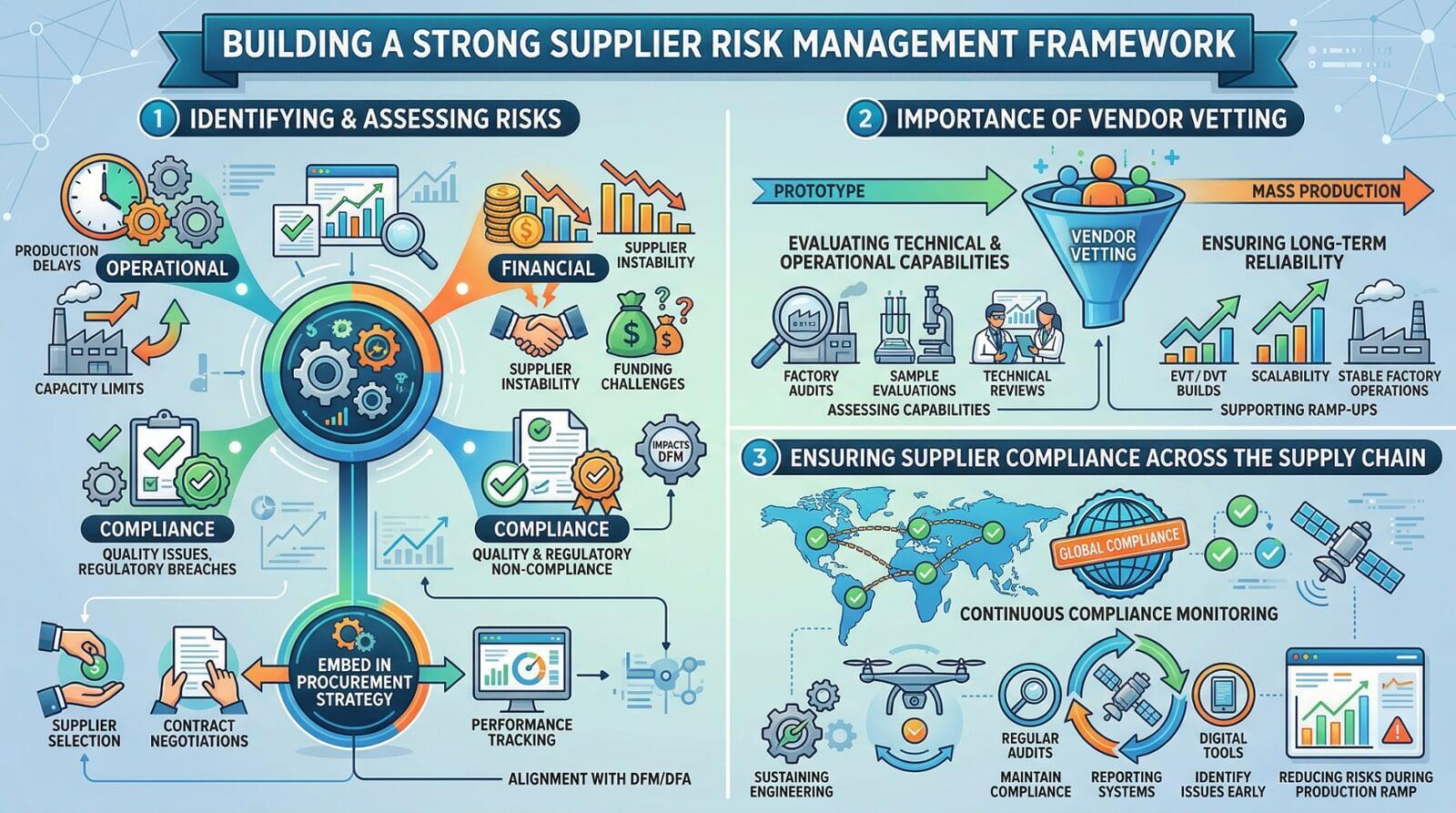
Beyond execution, procurement plays a critical role in building resilience and long-term value within the supply chain.
This includes proactively managing risks and developing strategic supplier partnerships that extend beyond transactional relationships.
Managing Supply Chain Risks
Consumer electronics supply chains are global and dynamic, making them vulnerable to disruptions such as component shortages and logistics delays.
Procurement teams mitigate these risks through multi-sourcing strategies, safety stock planning, and strong supplier collaboration. Practices like buffer inventory optimization and demand forecasting aligned with Sales & Operations Planning (S&OP: Sales and Operations Planning) further strengthen resilience.
These approaches help maintain continuity from production through final delivery.
Takeaway: Proactive risk management ensures uninterrupted supply chain performance.
Building Long-Term Supplier Relationships
Effective procurement strategies focus on long-term supplier partnerships rather than one-off transactions.
Through Supplier Relationship Management (SRM: Supplier Relationship Management), companies improve communication, enhance collaboration, and drive continuous improvement across their supplier base.
Strong relationships contribute to better performance, increased innovation, and more resilient supply chains.
Takeaway: Long-term supplier partnerships strengthen reliability and innovation.
Conclusion
Procurement in the consumer electronics industry—where rapid NPI cycles and validation frameworks like EVT, DVT, and PVT define success—is a strategic function that spans the entire lifecycle from concept to final delivery.
From early design alignment and supplier selection to contract negotiation, production oversight, and risk management, procurement plays a central role in delivering successful products.
By integrating DFM (Design for Manufacturability), NPI (New Product Introduction), and SRM (Supplier Relationship Management), procurement goes beyond cost control to enable scalability, resilience, and innovation. Early involvement, in particular, significantly impacts product feasibility, cost structure, and speed to market.
Procurement is the backbone of successful consumer electronics manufacturing programs.
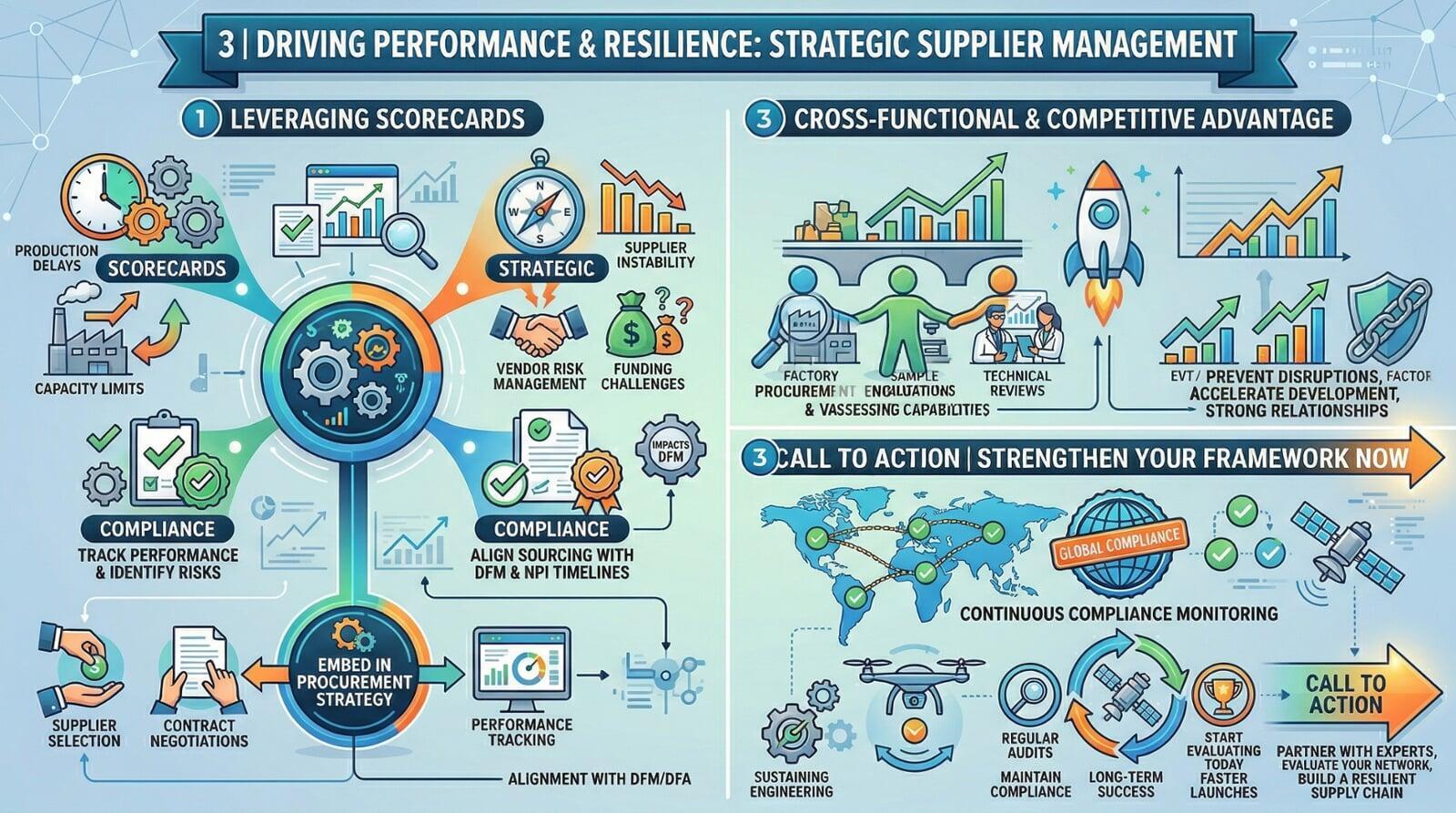
Organizations that collaborate early, build strong supplier networks, and proactively manage risks are better positioned to deliver high-quality products at scale. By embedding DFM, TCO (Total Cost of Ownership), and SRM into procurement strategies, teams can improve efficiency and execution from concept through final delivery.
If you're looking to reduce supply chain uncertainty and improve product outcomes, partner with Vulcry’s manufacturing and procurement experts to drive efficiency, scalability, and reliable delivery.
Frequently Asked Questions (FAQs)
1. How does procurement support consumer electronics from design to delivery?
Procurement supports the entire lifecycle by aligning with product development, sourcing and qualifying suppliers, managing RFPs, negotiating contracts, and overseeing production. By integrating DFM and strategic sourcing early, procurement ensures products are cost-effective, manufacturable, and delivered on time.
2. Why is early procurement involvement important in product development?
Early involvement allows procurement teams to align sourcing decisions with design requirements, evaluate supplier capabilities, and identify risks before they impact production. This reduces redesign cycles, improves manufacturability, and ensures smoother transitions from EVT to DVT and mass production.
3. How do procurement teams ensure supplier reliability and production quality?
Procurement teams use structured processes such as supplier evaluation, qualification (PPAP, FAI), and performance tracking through KPIs like On-Time Delivery (OTD) and First Pass Yield (FPY). These practices ensure suppliers consistently meet quality, cost, and delivery expectations.
4. What role does risk management play in consumer electronics procurement?
Risk management is critical due to global supply chain complexities. Procurement teams mitigate risks through multi-sourcing, safety stock planning, and strong supplier relationships. These strategies help maintain production continuity and protect against disruptions.