5 Things the Best Procurement Professionals in the World Do to Ensure Production Success
The best procurement professionals don’t treat selection decisions as a box-checking exercise during sourcing. They see them as strategic choices that directly shape production stability, supplier performance, and long-term business risk.
Rather than relying only on specifications or price comparisons, top buyers focus on how decisions perform on real production lines—under supplier capacity constraints, lifecycle wear, and volume pressure over time. Their approach is disciplined, cross-functional, and designed to scale.
This article breaks down how the world’s best procurement professionals think about selection decisions for long-term production success.
Selection Starts With Production Intent
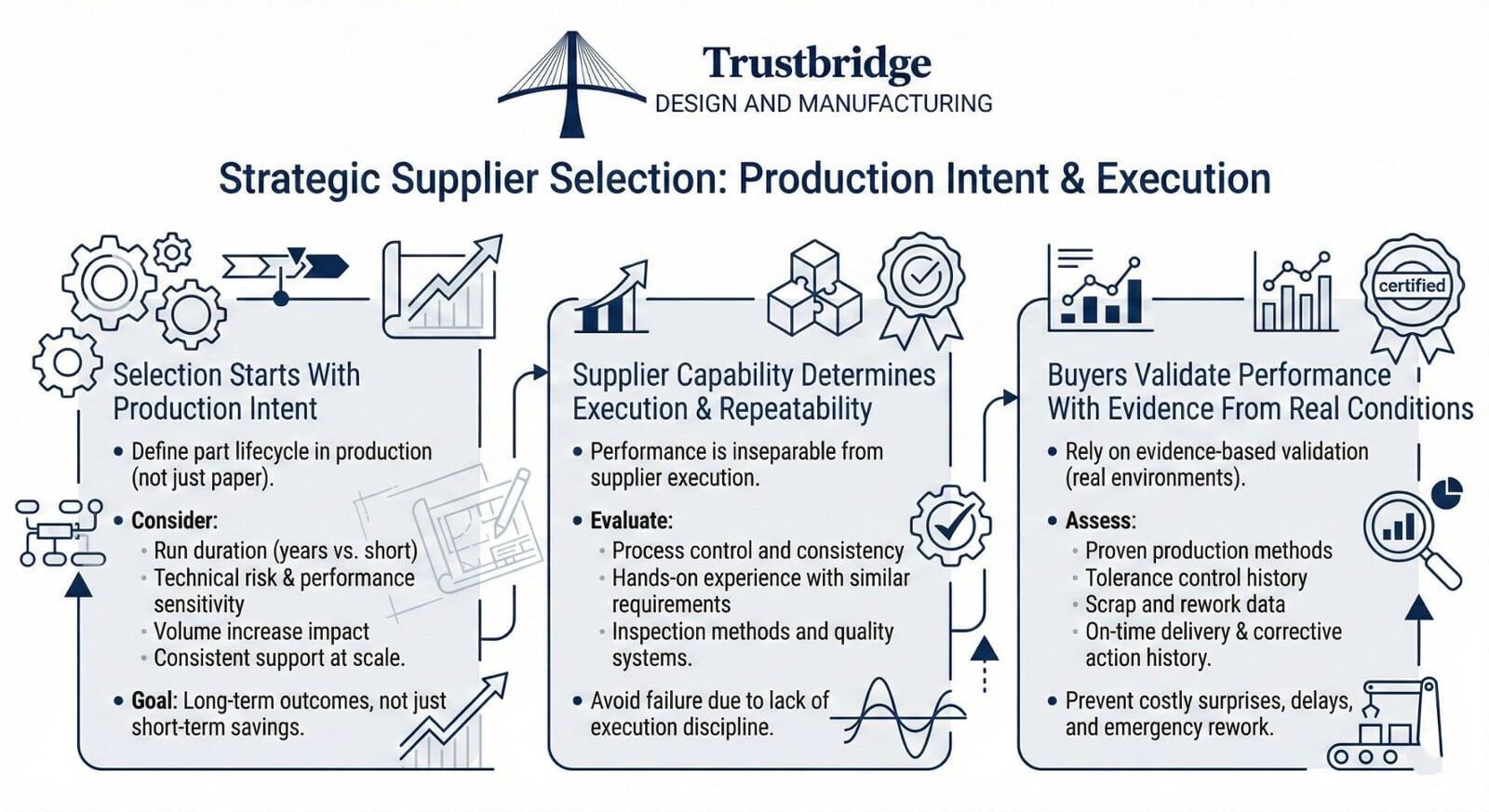
Top buyers begin by defining how a part or component will live in production—not just how it looks on paper.
They ask:
Will this run for years or only for short programs?
Where is the technical risk or performance sensitivity?
What happens when volumes increase?
Can the supplier support this consistently at scale?
This clarity ensures decisions support long-term outcomes rather than short-term savings.
Supplier Capability Determines Execution and Repeatability
Experienced buyers understand that performance is inseparable from supplier execution. A well-defined specification means little if the supplier cannot repeat it reliably at production volumes—for example, holding tolerances consistently across shifts or maintaining process stability as demand ramps up.
They evaluate:
Process control and consistency
Hands-on experience of supplier personnel with similar requirements
Inspection methods and quality systems
Even the best-defined choice can fail if the supplier lacks the discipline to execute it correctly.
Buyers Validate Performance With Evidence From Real Conditions
Leading procurement professionals rely on evidence-based validation rather than assumptions. They look at how suppliers have actually performed in real production environments.
They assess:
Proven production methods
Tolerance control history
Scrap and rework data
On-time delivery and corrective action history
This production-first mindset prevents costly surprises that disrupt manufacturing schedules, delay customer deliveries, or require emergency rework after programs are already live.
Risk Is Addressed Before Contracts Are Signed
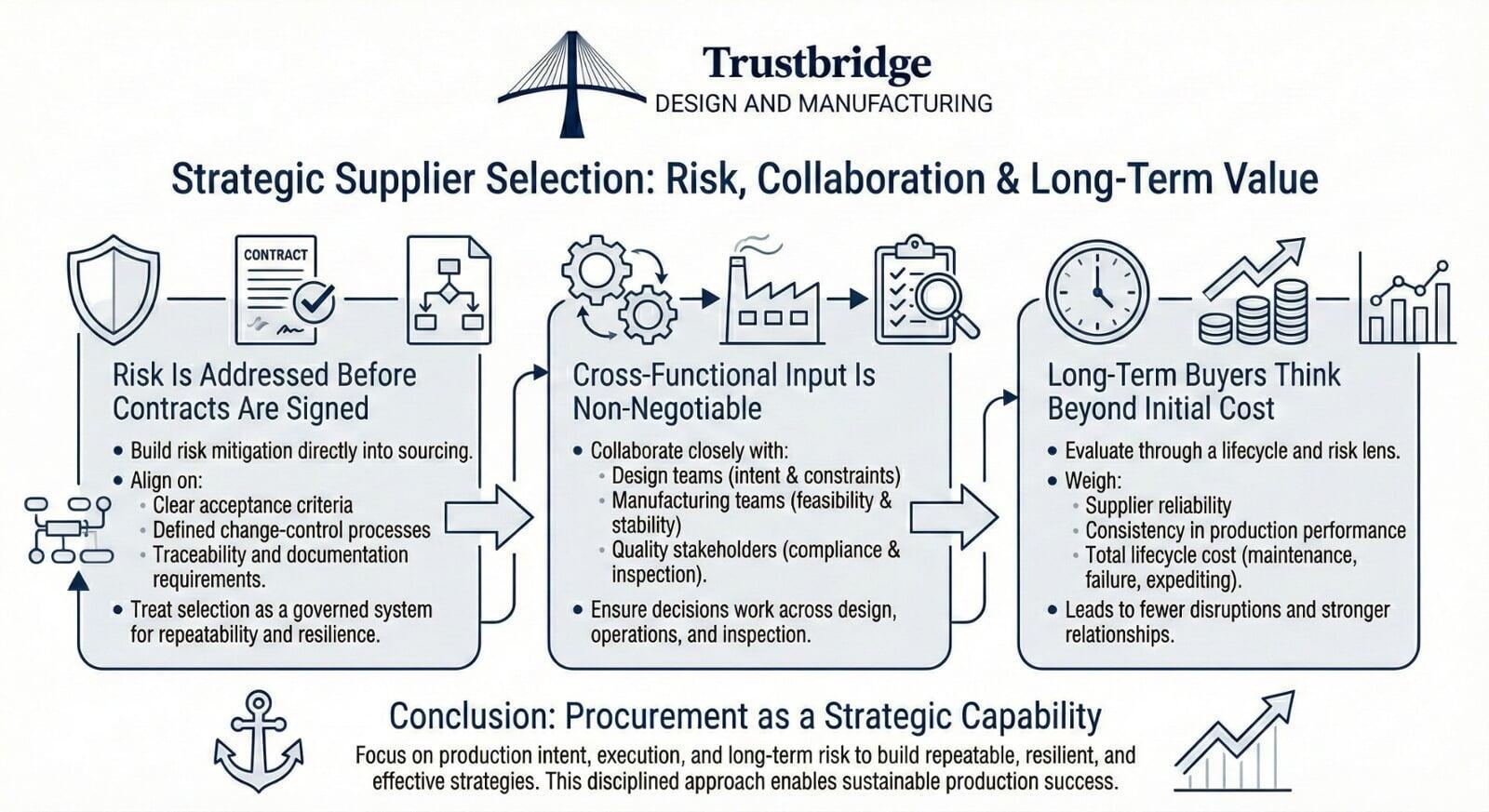
Best-in-class buyers build risk mitigation directly into the sourcing process.
They align on:
Clear acceptance criteria
Defined change-control processes
Traceability and documentation requirements
Selection is treated as a governed system, not a one-time decision, enabling repeatability and resilience as production scales.
Cross-Functional Input Is Non-Negotiable
Strong procurement leaders collaborate closely with:
Design teams, to understand intent and constraints
Manufacturing teams, to validate feasibility and process stability
Quality stakeholders, to ensure compliance and inspection readiness
This alignment ensures faster launches, stable production, and consistent quality by ensuring decisions work across design intent, operational reality, and inspection requirements.
Long-Term Buyers Think Beyond Initial Cost
Elite buyers evaluate sourcing decisions through a lifecycle and risk lens, knowing the lowest upfront cost rarely delivers the best long-term value.
They weigh:
Supplier reliability
Consistency in production performance
Total lifecycle cost, including maintenance, failure rates, and expediting risk
This mindset leads to fewer disruptions and stronger supplier relationships over time.
Conclusion
The best procurement professionals treat selection decisions as a strategic capability. By focusing on production intent, supplier execution, and long-term risk, they build sourcing strategies that remain repeatable, resilient, and effective as scale and time increase.
This disciplined, forward-looking approach is what separates transactional procurement from procurement that enables sustainable production success.