5 Ways Color 3D Printing Can Speed Up Product Development and Boost ROI
Introduction
Product development in consumer products industries moves at an increasingly rapid pace. Companies launching smart home devices, wearables, household appliances, and lifestyle products must iterate designs quickly while maintaining quality and controlling costs. In competitive markets, the ability to move from concept to prototype faster often determines which products reach customers first.
Color 3D printing has become a valuable tool for teams looking to accelerate product development cycles. By transforming digital models into full-color physical prototypes, companies can test design ideas earlier, evaluate aesthetics, and communicate concepts more clearly across teams. This capability not only speeds up development but also helps organizations reduce costly redesigns later in the process.
For procurement leaders and product teams, adopting color 3D printing also involves strategic supplier decisions. Factors such as engineering plastics material capabilities, ABS plastic 3D printing expertise, vendor vetting, and supplier risk management must all be evaluated carefully. When these considerations are addressed effectively, companies can leverage color additive manufacturing to accelerate innovation while preparing products for scalable OEM manufacturing.
Understanding the Role of Color 3D Printing in Product Development
Traditional prototyping methods often involve multiple steps, including tooling preparation, machining, or manual finishing. These processes can slow development timelines and make rapid design iteration difficult. Color 3D printing addresses these challenges by allowing design teams to quickly convert CAD models into visually accurate prototypes.
Unlike standard monochrome prototypes, color 3D printed parts provide immediate insight into aesthetics, branding elements, and product usability. Teams can evaluate design decisions earlier in the development process, reducing uncertainty before moving into expensive production phases.
- Improving Design Communication Across Teams
One of the key benefits of color 3D printing is improved communication among product teams. Designers, engineers, marketing specialists, and procurement managers often interpret digital models differently. A physical prototype that accurately represents colors, textures, and design features creates a shared understanding of the product concept.
When stakeholders can see and handle a prototype, feedback becomes more precise. Teams can quickly identify design improvements, address functional concerns, and align on product direction without relying solely on digital renderings.
- Accelerating Iterative Design Cycles
Product development rarely follows a straight path. Designers typically produce several versions of a product before finalizing a design that meets performance, usability, and aesthetic requirements. Color 3D printing allows companies to run rapid iteration cycles where new prototypes can be produced within days rather than weeks.
This faster iteration process reduces the risk of discovering design flaws late in development. Instead of waiting for traditional prototyping methods, teams can refine designs continuously, leading to faster innovation and more confident product decisions.
Enhancing Visual and Functional Validation
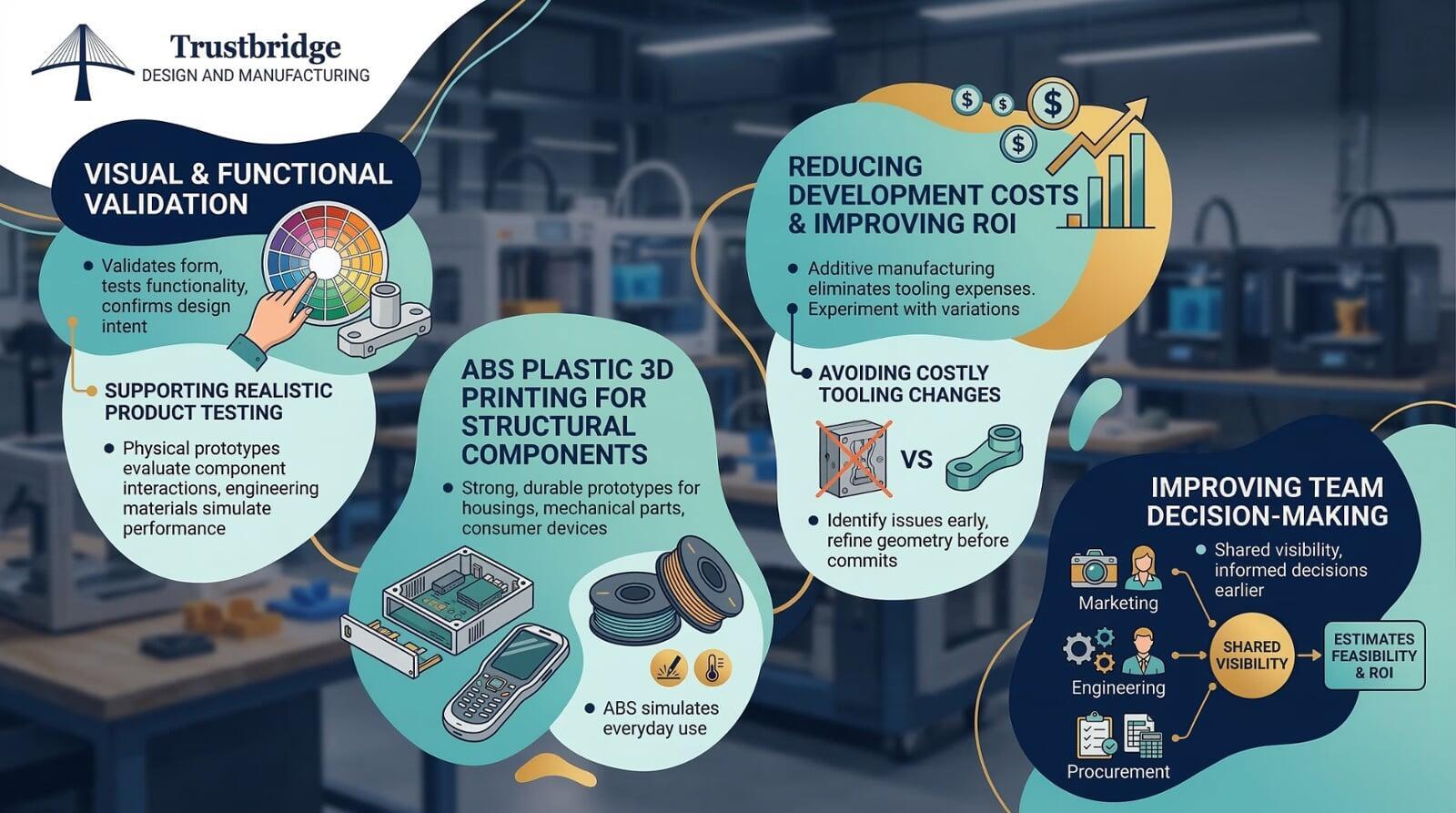
Prototypes serve multiple purposes in product development. They help validate form, test functionality, and confirm that design intent aligns with real-world performance requirements. Color 3D printing enhances this validation process by producing parts that closely resemble the final product.
For consumer-facing products, visual accuracy plays a critical role in early evaluation. Design teams can examine color schemes, branding elements, and product aesthetics while simultaneously testing functional aspects such as ergonomics and assembly fit.
- Supporting Realistic Product Testing
Physical prototypes allow teams to evaluate how components interact in real-world scenarios. Engineers can test how parts fit together, verify internal structures, and ensure assembly mechanisms function as intended.
Using appropriate engineering plastics material further improves the reliability of prototype testing. These materials simulate the mechanical characteristics of production-grade plastics, enabling teams to evaluate durability, flexibility, and structural performance under realistic conditions.
- ABS Plastic 3D Printing for Structural Components
ABS plastic 3D printing remains one of the most widely used methods for creating durable prototypes. ABS offers strong impact resistance, moderate flexibility, and heat tolerance, making it suitable for product housings, structural elements, and mechanical components.
Many consumer products such as electronic device enclosures, appliance casings, and handheld gadgets are ultimately manufactured using ABS or similar materials. By prototyping with ABS-based materials, design teams gain valuable insight into how the final product will behave during everyday use.
Reducing Development Costs and Improving ROI
While rapid prototyping primarily focuses on speed, cost reduction is another major advantage of color 3D printing. Traditional prototyping techniques often require custom molds or machining processes that can become expensive during early design stages.
By producing prototypes directly from digital files, color additive manufacturing eliminates many of these upfront tooling expenses. Companies can experiment with multiple design variations without committing to expensive manufacturing setups.
- Avoiding Costly Tooling Changes
One of the most expensive mistakes in product development occurs when design flaws are discovered after production tooling has been created. Injection molds and other manufacturing tools can cost thousands of dollars to modify once they are completed.
Color 3D printing helps identify potential design issues before these investments are made. When prototypes are evaluated early, companies can refine product geometry, internal structures, and assembly features before committing to large-scale manufacturing tools.
- Improving Decision-Making Across Product Teams
Visual prototypes also improve decision-making for stakeholders responsible for product development investments. Marketing teams can evaluate product appearance, engineering teams can assess functionality, and procurement teams can estimate manufacturing feasibility.
This shared visibility helps organizations make informed decisions earlier in the development process, ultimately improving return on investment for new product initiatives.
Supporting the Transition to OEM Manufacturing
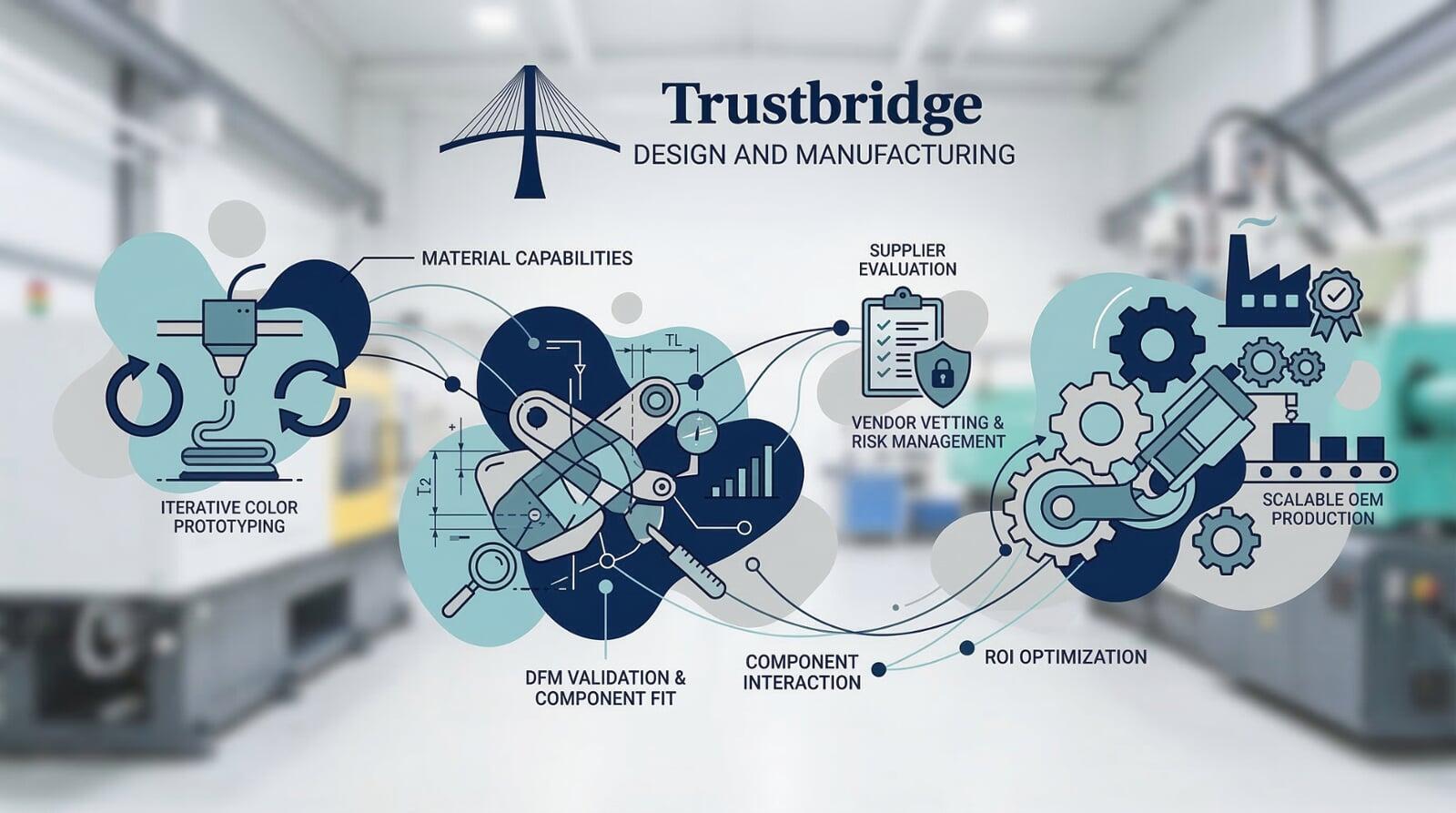
Although color 3D printing is often associated with prototyping, its true value emerges when prototypes are designed with production scalability in mind. Products developed using additive manufacturing insights can transition more smoothly into large-scale OEM manufacturing.
When prototypes reflect realistic manufacturing constraints, companies can reduce the number of changes required before production begins.
- Designing Prototypes with Manufacturing Constraints
Successful product development requires alignment between design creativity and manufacturing feasibility. Factors such as wall thickness, part tolerances, and structural reinforcement must be considered when developing prototypes.
By applying Design for Manufacturing principles during the prototyping phase, companies ensure that designs can be efficiently produced using processes such as injection molding, CNC machining, or thermoforming.
- Preparing Products for Scalable Production
Color 3D printed prototypes also help identify potential manufacturing challenges early. Engineers can detect assembly misalignments, evaluate component interactions, and confirm structural integrity before moving into full-scale production.
These early insights reduce the risk of costly redesigns during production ramp-up and help ensure that products transition smoothly into OEM manufacturing environments.
Strengthening Supplier Evaluation Through Vendor Vetting and Risk Management
From a procurement perspective, selecting the right additive manufacturing partner requires more than evaluating printing capabilities. Organizations must also consider supplier reliability, operational stability, and long-term collaboration potential.
Vendor vetting and supplier risk management practices play a critical role in ensuring that prototyping programs run smoothly without unexpected delays.
- Vendor Vetting for 3D Printing Service Providers
Vendor vetting typically involves reviewing a supplier’s technical expertise, material capabilities, and past project experience. Procurement teams may evaluate sample prints, review case studies, and examine quality management practices to determine whether a supplier can consistently deliver high-quality prototypes.
Suppliers with strong experience in product development projects are often better equipped to support iterative design cycles and evolving product requirements.
- Managing Supplier Risk in Rapid Development Programs
Even small delays in prototype delivery can disrupt product development timelines. Engineering reviews, design approvals, and market launch planning often depend on the timely arrival of physical prototypes.
Effective supplier risk management includes evaluating delivery reliability, communication responsiveness, and production capacity. Suppliers that demonstrate consistent lead times and transparent communication practices are better suited to support fast-paced development environments.
Conclusion
Color 3D printing has transformed the way companies approach product development. By enabling rapid design iteration, improving visual validation, and supporting realistic functional testing, this technology helps organizations move from concept to prototype faster than ever before.
When used strategically, color additive manufacturing also improves return on investment by reducing development costs, preventing costly tooling changes, and enhancing collaboration across product teams.
However, achieving these benefits requires thoughtful supplier selection. Procurement teams must evaluate engineering plastics material capabilities, ABS plastic 3D printing expertise, vendor vetting practices, and supplier risk management strategies when choosing additive manufacturing partners.
Companies that integrate color 3D printing into their product development workflows gain a significant competitive advantage. Faster prototyping cycles, improved design accuracy, and better preparation for OEM manufacturing all contribute to more successful product launches.
For consumer product companies looking to accelerate innovation, choosing the right 3D printing partner can make a significant difference in product development success.
Experienced additive manufacturing providers can help your team select the right engineering plastics material, validate designs using ABS plastic 3D printing, and ensure prototypes are aligned with future OEM manufacturing requirements.
By combining advanced color 3D printing capabilities with structured vendor vetting and supplier risk management practices, organizations can reduce development risks, speed up product launches, and improve overall ROI.
If your team is exploring color 3D printing for product development, partnering with experienced specialists can help you transform ideas into production-ready designs faster and more efficiently.
Frequently Asked Questions (FAQs)
1. What should consumer product companies evaluate before buying 3D printing services?
Before purchasing 3D printing services, buyers should evaluate several factors including printing technology, available materials, prototype accuracy, supplier reliability, and the provider’s experience with consumer product development. These elements ensure that prototypes accurately represent the final product and support faster design validation.
2. Why is material selection important when sourcing 3D printing services?
Material selection determines how well a prototype performs during testing. Using appropriate engineering plastics material, such as ABS-like materials, allows companies to test durability, flexibility, and mechanical performance before moving toward full-scale OEM manufacturing.
3. How does vendor vetting help reduce risk when choosing a 3D printing supplier?
Vendor vetting allows procurement teams to assess a supplier’s technical capabilities, production capacity, and reliability. By reviewing past projects, delivery performance, and customer references, buyers can identify partners capable of consistently delivering high-quality prototypes and meeting development timelines.
4. Can 3D printing services help companies prepare for OEM manufacturing?
Yes. Many consumer product companies use 3D printing services to validate designs before transitioning to mass production. Prototyping with materials such as ABS plastic 3D printing helps teams test product functionality and refine designs so they are better prepared for scalable OEM manufacturing.